R&D
News
February 17, 2022
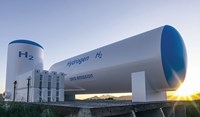
Houston biotech startup Cemvita Factory is partnering with U.S. gas-equipment manufacturer Chart Industries Inc. to use oil-eating microbes to make hydrogen.

News
February 16, 2022
Scientists have deployed a network of seismometers onto Antarctica’s Brunt Ice Shelf in an experiment which will test the ability of the instruments to operate on icy moons of the Solar System.

Article
January 2022
Utilizing environmentally friendly bio-based surfactants that provide mechanisms of action, which surpass traditional petroleum-based products, U.S. operators are improving crude output while increasing total well lifecycle.
Article
January 2022
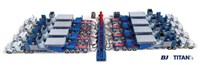
Increased industry demand for lower emissions, improved operational efficiency and reliability, and competitive capital cost structure, all call for innovative thinking in hydraulic equipment design and engineering. Direct-drive turbine technology has been proven to take up the challenges.

Article
January 2022
Computational methods were used to assess the capacity of four surfactant molecules. The experimental assessment, based on rocking cell measurements, determined the minimum effective dose necessary to inhibit agglomeration, enabling an efficient funnel for molecular optimization and customization.

Article
January 2022
Automation of drilling operations minimizes safety risks while increasing efficiency. Targeting well control operations provides meaningful advances to operational performance and risk reduction.
News
December 21, 2021
Logan Industries International Corporation has successfully delivered a subsea grease injection unit as part of a complete subsea wireline pressure control system for a major subsea oil and gas company.
Article
December 2021
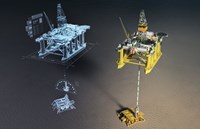
A company has developed a novel sensor technology to overcome direct measurement of load using strain gauges that allows for accurate measurement of strains in a wide measuring range, as part of a subsea wellhead integrity monitoring system.
Article
December 2021
Researchers at NETL and its partners are advancing technologies capable of improving the performance, reliability and flexibility of methods to produce, transport, store and use hydrogen
Article
December 2021
Subsea injection of drag reducing agents (DRA) into flowlines reduces friction and substantially increases production. For years, DRA has been widely used onshore, and in upstream transfer and export systems. Today, breakthrough advancements allow DRA to be injected into subsea production systems.

Article
December 2021
Mitigating or controlling the outcome of significant unknowns is most effective when done from the very beginning to ensure that coiled tubing is the right technology for the application. The feasibility study is, therefore, arguably the most important stage in project planning.
Article
December 2021
The search for new energy sources has focused renewed attention on reducing costs and improving drilling efficiency. One company is conducting scientific research to launch innovative technologies to address the challenge.
Article
November 2021
Controlling top-to-bottom limiters
Article
November 2021
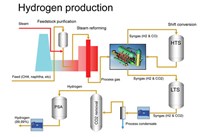
The DOE’s NETL is either conducting or considering a variety of projects geared to finding methods for large-scale, cost-effective hydrogen production.
Article
November 2021
Experts from Xodus and Equinor ASA provide insight and analysis on why flow-induced vibration is a concern for subsea systems and how they are driving improved industry understanding to eliminate costly and potentially dangerous consequences.

Article
November 2021
During a recent North Sea project, production had been constrained on an operator’s normally unmanned installation to meet H2S specifications. A bespoke solution was developed, capable of protecting the NUI against hydrates while ensuring efficient scavenging of H2S.

Article
October 2021
Innovative bit exceeds average rop of offsets and reaches total depth in a single run, in Brazil’s Parnaiba basin

Article
October 2021
High temperatures, high pressures and/or abrasive formations can make for unmanageable conditions. A proprietary MWD technology has been developed to endure harsher downhole environments than previous measurement logging tools.