The business case for autonomous robotic missions in oil and gas
MARK MILDON, ExRobotics
The traditional image of the oil and gas industry — a landscape defined by heavy steel and physical labor — is steadily evolving.
Today, the sector is no longer determined just by the extraction of hydrocarbons, rather a critical convergence of data, digital fluency and operational resilience.
For operations managers and directors overseeing onshore plants and offshore platforms, the challenges are intensifying. Operators are grappling with aging infrastructure and a shrinking pool of specialist labor to maintain them, all while managing increasingly complex assets.
Against this backdrop, the role of robotics has matured. What began as tech demos and pilot projects is now developing into smart robotic missions — repeatable, reliable operations that serve as critical assets to keep facilities on track.
FROM INSPECTION ROUTES TO AUTONOMOUS MISSIONS
Traditionally, inspection in hazardous oil and gas environments has relied on fixed human inspection routes.
Technicians physically enter classified areas to perform visual checks, listen for abnormal sounds, read gauges and verify that safety systems are functioning as expected.
While essential, these routines are also inherently variable. Results depend on lighting, weather conditions, fatigue, experience level, and time pressure.
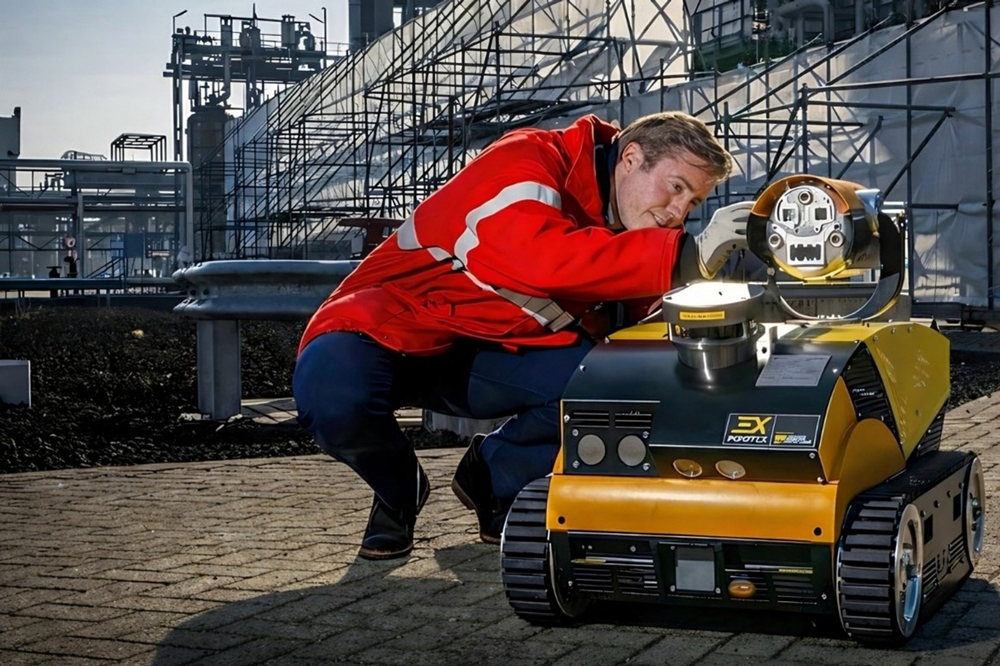
In offshore environments, inspection routes are often constrained by weather windows, helicopter availability and shift patterns.
Inspections may be delayed or compressed, increasing both operational risk and stress on personnel.
Onshore, similar pressures exist in large, complex facilities where access scaffolding, confined space permits and simultaneous operations can limit inspection coverage during a normal shift.
Autonomous robotic missions introduce a fundamentally different inspection model, Fig. 1.
Rather than relying on episodic human presence, inspection becomes continuous, repeatable and data-driven.
Robots follow the same routes, stop at pre-defined checkpoints, collect the same measurements and store them in structured datasets that can be compared over time.
This consistency is one of the least discussed and most valuable benefits of robotics in hazardous areas.
Rather than replacing existing inspection philosophies, robotic missions formalize and strengthen them. What was once tacit knowledge becomes measurable evidence. What was once anecdotal, becomes auditable.
Over time, this enables operators to move from subjective assessments ("this valve sounds different") to trend-based decisions supported by historical data.
SECURING THE LICENSE TO OPERATE
Maintaining the “license to operate”—encompassing safety, compliance and environmental stewardship—remains a primary concern for asset managers. Historically, this has relied on human-led inspections, which inherently carry risk and variability. Ex-certified robotic platforms offer an alternative by conducting inspections in hazardous zones without requiring human entry.
Equipped with optical, thermal, acoustic and environmental sensors, these systems can perform routine safety checks and transmit real-time data from classified areas.
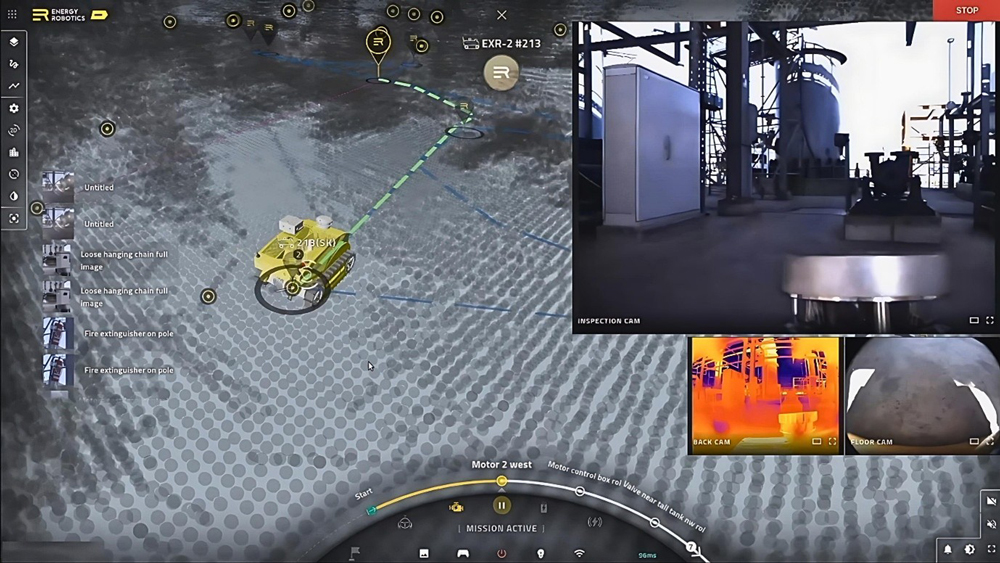
Acoustic cameras can detect high-frequency sound signatures from gas leaks and mechanical faults, while thermal imaging identifies overheating components. Optical cameras support corrosion monitoring and gauge verification, and environmental and safety sensors monitor conditions relevant to hazardous locations.
Autonomous navigation and obstacle-avoidance enable operation within complex live industrial facilities, with robots returning to Ex-certified charging stations between missions, Fig. 2.
By identifying problems before they escalate, robotic inspection can turn unknown conditions into actionable safety data.
Robots can be pre-programmed for fully autonomous rounds or controlled manually from thousands of miles away, meaning operators can investigate potential issues in real time, without placing anyone in a hazardous area.
Several major operators have deployed ExRobotics’ inspection robots across upstream, downstream, LNG and chemical facilities to improve routine inspections.
WHY EX-CERTIFICATION MATTERS IN REAL OPERATIONS
Hazardous area robotics only work if the robot itself does not become an ignition source. This is why Ex-certification is not a marketing label but an engineering constraint that shapes every design decision.
Zone 1 environments—where explosive atmospheres are likely to occur during normal operation—are often the same areas where fugitive emissions occur. An Ex-certified robot can continue operating when gas is present, allowing it to investigate, localize and document the issue, rather than triggering an evacuation or shutdown.
In practical terms, operators gain time. Instead of responding reactively to alarms, operators can use robotic data to assess whether a developing issue represents a safety risk, a maintenance concern or a transient condition. This distinction is critical offshore, where unnecessary shutdowns carry major safety and financial implications.
This capability fundamentally changes how operators respond to early-stage leaks. Instead of relying on fixed gas detectors alone, which are typically set to detect higher concentrations for safety purposes, mobile robots can “fill in the gaps” by detecting lower concentrations across wider areas and at more frequent intervals. In effect, they extend the sensitivity and coverage of existing safety systems without altering their core function.
NAVIGATING THE RECRUITMENT CRISIS
The industry is currently facing a significant generational challenge. The "Great Handover" is no longer a future threat; it is an active operational risk. Recruitment for traditional energy roles has become increasingly difficult.
The talent deficit. The energy industry is estimated to face a shortage of up to 40,000 competent workers globally.1
According to the EY U.S. Oil and Gas Perception Poll, 62% of Gen Z teens find a career in the industry unappealing, while only 26% of the broader Gen Z demographic find such roles attractive, making the replacement of retiring engineers a mounting challenge.2
Robotic missions address this workforce pressure by automating routine and hazardous inspection rounds, thus allowing experienced technicians to focus on critical repairs and decision-making, rather than basic monitoring.
Equally important, robots help preserve institutional knowledge. As inspections are logged digitally, trends and historical baselines are retained, even as personnel change. For aging infrastructure, this continuity is essential. Subtle changes in vibration, temperature or gas concentration might be missed by rotating teams. These trends become visible when consistent data are collected over months and years.
EMISSIONS DETECTION
One of the fastest-growing applications for autonomous inspection robots is fugitive emissions detection.
Regulators are increasingly combining satellite monitoring, aerial surveys and on-site inspections to identify methane and VOC releases. While satellites are effective at identifying large plumes, they are not designed to detect small, early-stage seepages.
This creates an operational gap. Small leaks can persist for months, contributing to emissions totals and escalating into safety or reliability issues, long before they are visible to external monitoring systems. Ground-based Ex-certified robots are uniquely suited to close this gap.
Their objective is simple: detect small, fix small. By identifying seepages long before they escalate, operators can prevent safety incidents, environmental harm and regulatory intervention. This approach aligns closely with emerging methane regulations, which increasingly emphasize rapid detection and repair rather than periodic manual surveys.
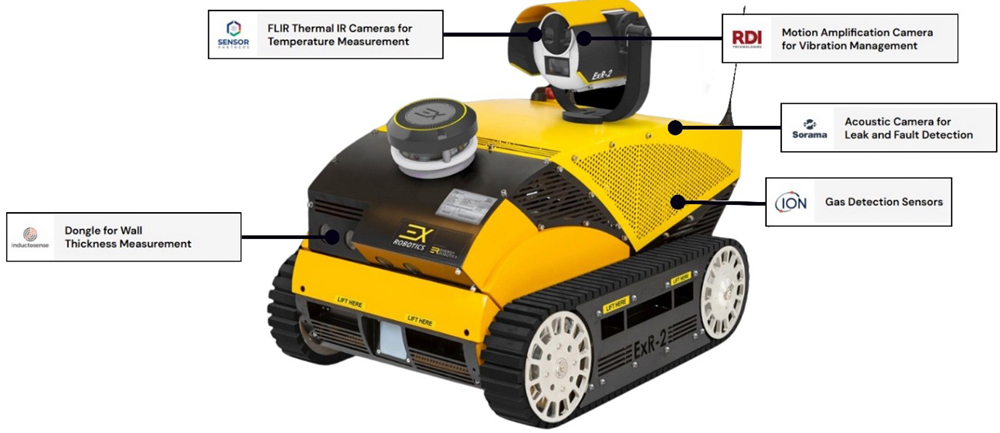
The ExR-2.5 platform has been configured with multiple sensor types to support this approach, including point gas detectors mounted low in the robot’s hull, where heavier-than-air VOCs are more likely to accumulate.
In practice, this allows robots to detect concentrations down to parts-per-million levels during routine patrols, often identifying issues that would otherwise go unnoticed between scheduled inspections, Fig. 3.
SENSOR FUSION: SEEING, HEARING AND MEASURING LEAKS
No single sensor is sufficient to characterize every leak scenario. Effective robotic inspection relies on sensor fusion: combining multiple measurement modalities to build confidence and reduce false positives.
Point gas detectors provide sensitivity, but not precise localization. Thermal infrared cameras can reveal cold spots caused by gas expansion at leak points, particularly where pressurized gas escapes into lower-pressure environments. Acoustic cameras detect the ultrasonic signature of pressurized gas escaping, even in high-wind or high-noise environments where traditional methods struggle.
Optical Gas Imaging cameras add another layer of confirmation by visualizing methane plumes directly. This is particularly valuable when regulators or insurers require visual evidence of a leak and its remediation. When combined, these sensors allow robots to detect that a leak exists and narrow down its likely source with far greater confidence than any single instrument alone.
Adding these sensors to an Ex-certified robotic platform isn’t straightforward. The power supply, data transfer, housing design and safety certification all must be planned and managed together.
When properly integrated, a single robotic platform can perform tasks that would otherwise require multiple specialists, using different handheld instruments (often over several days).
THE ECONOMICS OF REMOTE AUTONOMY
The business case for robotics is perhaps strongest in remote and offshore environments.
The high cost of an hour. In heavy industry and oil operations, unplanned downtime now costs the world's 500 largest companies 11% of their total revenue.3
The three-day metric. Just three-and-a-half days of unplanned downtime in the oil and gas sector can result in losses exceeding $5 million (£4.1 million) for a mid-sized facility.4
Robots permanently based on platforms or plants provide constant monitoring and awareness of what’s happening.
By helping operators distinguish between spurious alarms and genuine anomalies, they reduce unnecessary shutdowns while ensuring critical issues are escalated quickly.
INTEGRATION AND ORGANIZATIONAL READINESS
For an operational director, the concern is often whether new technology will disrupt existing operations.
Industrial inspection robots are designed to avoid interfering with control or safety systems. They operate safely alongside them, providing additional layers of observation and verification. This distinction is critical for conservative operating environments where system changes are tightly controlled.
Robotic inspection data can be integrated into existing maintenance management systems, digital twins and asset integrity platforms. This allows inspection insights to feed directly into work orders, risk assessments and long-term maintenance planning, reinforcing rather than replacing established processes.
ROBOTS AS PART OF A WIDER INSPECTION PORTFOLIO
Autonomous robots are most effective when deployed as part of a layered inspection strategy, rather than as stand-alone solutions.
Fixed gas detectors provide continuous safety monitoring at critical points. Robots provide mobility and sensitivity, detecting small leaks across wide areas and in locations that are difficult or impractical for fixed sensors. Aerial drones and satellite systems identify large-scale emissions and provide macro-level oversight. Long-range spectroscopy systems monitor gas clouds across entire facilities.
Understanding the strengths and limitations of each technology allows operators to design inspection regimes that are both cost-effective and robust.
In this context, robots act as the link between fixed sensors and wider monitoring systems. They turn high-level surveillance into practical, real-time information on the ground.
PREPARING ORGANIZATIONS FOR ROBOTIC INSPECTION
Successful deployment of robotic inspection is as much an organizational exercise as a technical one. Operators must define clear objectives for robotic missions, identify which inspection tasks are most suitable for automation, and ensure that data ownership and response processes are clearly established.
A common early mistake is to deploy robots as a stand-alone innovation project, rather than embedding them into existing inspection, maintenance and HSE workflows.
Robots only generate value when their data lead to insights that can drive decisions. This requires clear escalation thresholds, agreed response times and ownership within operations and maintenance teams. Without this governance, even high-quality inspection data risks being underused.
From an offshore perspective, robotics also support new operating models. For example, including reduced manning and increased reliance on onshore support centers. Inspection data collected autonomously can be reviewed by specialists hundreds or thousands of kilometers away, improving consistency while reducing exposure.
Over time, organizations that embed robotics into their inspection philosophy tend to see broader benefits: improved safety culture, better data discipline, stronger regulatory confidence and more proactive maintenance behaviors.
CONCLUSION
The transition to robotics is not a replacement for the human element; it is an amplification of it.
By automating the dull, dirty and dangerous inspection rounds, experienced technicians are free to focus on critical repairs and high-level decision-making.
The question is no longer about the novelty of the machine. It is about the value of the data and the safety of the distance that inspection robots can deliver in hazardous environments.
Those who integrate smart robotic missions now are not just buying or leasing new technology.
They are securing the resilience of their infrastructure and assets for the next decade.
MARK MILDON is the CEO of ExRobotics. He holds an Meng degree from Durham University and an MBA from INSEAD. After spending 20+ years in the automotive industry, in a variety of roles across the supply chain and OEMs, Mr. Mildon joined ExRobotics with the vision to drive innovations into the mainstream.
Headquartered in Delft, the Netherlands, ExRobotics designs and manufactures rugged, reliable ATEX and IECEx Zone 1-certified robots that enable safer, more efficient and lower-emission operations.
REFERENCES
- Source: IOGP https://www.iogp.org/workstreams/workforce-energy/
- Source: EY US Oil and Gas Perception Poll https://www.prnewswire.com/news-releases/ey-poll-finds-oil-and-gas-industry-faces-talent-problem-in-young-american-perceptions-300476718.html
- Source: Siemens / Senseye https://assets.new.siemens.com/siemens/assets/api/uuid:1b43afb5-2d07-47f7-9eb7-893fe7d0bc59/TCOD-2024_original.pdf
- Source: Kimberlite Research https://www.hint-global.com/blog/cost-of-unplanned-downtime)
- FlexRobotics hits the Permian: H&P’s robotic rig makes its field debut (December 2025)
- Executive Viewpoint: The robots are here: They run on oil (September 2025)
- Kodiak delivers RoboTrucks to Atlas, which completes 100 driverless loads of proppant (March 2025)
- Data and knowledge are instrumental to digital transformation, software executive says (March 2022)
- What's new in production (May 2019)
- Executive viewpoint (March 2019)
- Subsea technology- Corrosion monitoring: From failure to success (February 2024)
- Applying ultra-deep LWD resistivity technology successfully in a SAGD operation (May 2019)
- Adoption of wireless intelligent completions advances (May 2019)
- Majors double down as takeaway crunch eases (April 2019)
- What’s new in well logging and formation evaluation (April 2019)
- Qualification of a 20,000-psi subsea BOP: A collaborative approach (February 2019)