Why decommissioning is really a waste management problem
PAUL BRINDLEY, KBR
Every energy system produces waste. The challenge is not whether waste exists, but how it is managed throughout the life of an asset and after production ends. In offshore oil and gas, this is most obvious during decommissioning, when operators are left to deal with the physical assets left over from decades of production activity.
Too often, however, decommissioning is treated as a final engineering exercise, when, in fact, it is a large-scale waste management problem. This requires operators to deal with infrastructure and contaminated materials, and places regulatory obligations and long-term liabilities on them, which can remain for years after production stops.
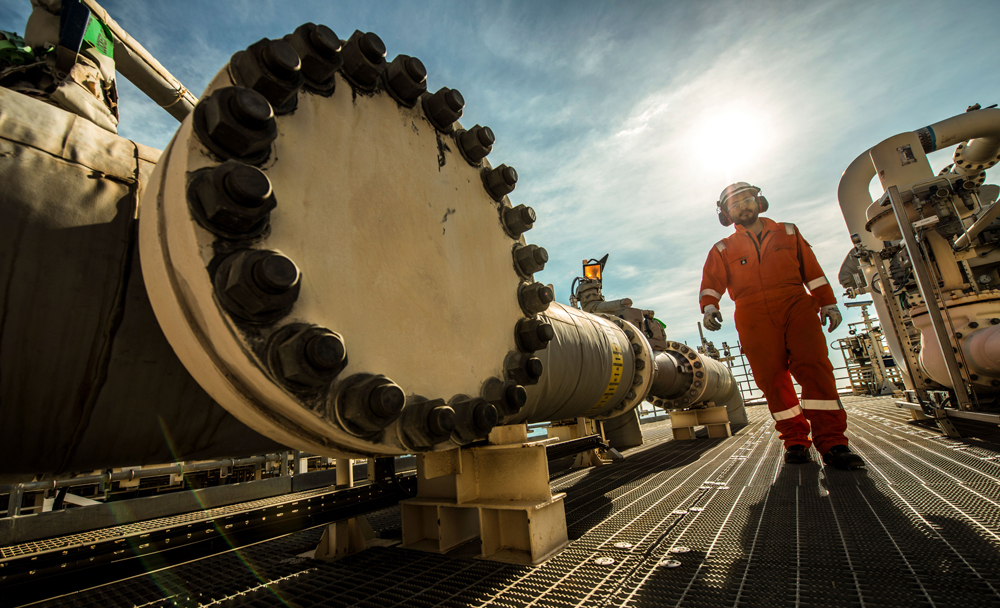
Looking at decommissioning as a waste management problem fundamentally changes how operators prepare for late-life operations and how they manage everything from costs and schedules to risk.
DELAYED DECOMMISSIONING
Much of the technical work involved in decommissioning is well understood. It involves plugging wells, isolating hydrocarbons, cleaning process systems and preparing the physical structures for removal. This is all supported by well-established heavy lift operations, as well as subsea recovery and dismantling activities.
However, in many offshore fields, the drive to maximize production until cessation-of-production (CoP) can overlook the amount of preparatory work needed before infrastructure can actually move into decommissioning, Fig. 1. Until reservoirs and pipelines are fully isolated from hydrocarbon sources, platforms remain live facilities, and the maintenance burden for safety critical systems changes very little.
As a result, operating costs often only reduce marginally until assets reach isolated-from-hydrocarbons status. This can take years, where plugging and abandonment (P&A) work has been deferred or where preparatory surveys and investigations have not been carried out early enough.
Brent field offshore the UK is one example, where preparatory work began in 2006, and decommissioning activities have continued for nearly two decades. This is also true across both the North Sea and Gulf of America/Mexico, where extended timelines associated with late-life assets are not uncommon.
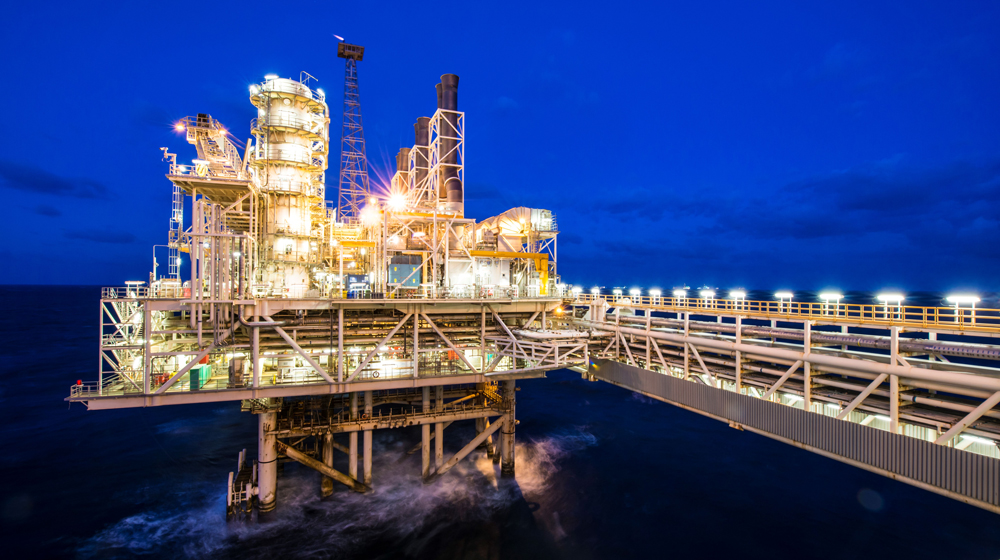
Putting work off can look like the easier option in the short term, especially when operators are trying to keep costs down towards the end of field life. However, it usually creates more problems later. Suspension periods become longer, regulators start asking tougher questions, and projects can face delays caused by vessel availability.
This is where front-end loading becomes critical. Early surveys of wells, topsides, subsea infrastructure and waste inventories help reduce uncertainty before major offshore work begins, Fig. 2. The earlier that operators understand the condition of facilities and the nature of the waste streams involved, the easier it becomes to sequence activities efficiently and avoid delays later.
THE WASTE LEFT BEHIND
Treating decommissioning as a waste management problem also changes the focus of planning. Large offshore structures contain significant volumes of steel and concrete, much of which can be recycled through established dismantling and scrap markets. The North Sea, in particular, has developed substantial dismantling capability around this activity.
However, the largest waste streams are not always the most complex.
Smaller contaminated materials often require far more specialist handling. For example, naturally occurring radioactive material, contaminated sludges, residual hydrocarbons and asbestos can all create additional challenges during dismantling and disposal activities.
In older facilities, hazardous materials, such as asbestos, may be contained in everything from insulation systems and adhesives to flooring materials. Identifying these materials early is important, particularly where dismantling facilities and licensed disposal capacity are limited.
As a result, waste routing is becoming an increasingly important consideration. If multiple projects begin at the same time, it can create a bottleneck at dismantling yards and overwhelm disposal sites and specialist treatment facilities.
The same is true offshore. Plugging wells, clearing inventories and cleaning systems are all highly sequenced activities and frequently depend on clear weather windows, vessel availability and specialist contractor support.
Heavy lift vessel demand is also increasing, particularly as offshore wind installation programs expand globally. In some regions, the same vessels required for platform removal are also supporting renewable energy construction projects, placing additional pressure on schedules and availability.
LONG-TERM RISK
The Gulf of America/Mexico and the North Sea provide two useful examples of how regulatory environments influence decommissioning behavior.
In the Gulf of America/Mexico, redundant platforms are generally not allowed to remain offshore indefinitely. Regulators have imposed clear expectations around P&A and infrastructure removal, helping establish a more continuous supply chain for decommissioning activity.
This became particularly important following the “downer” platform situation, where hurricane-damaged facilities had remained offshore, unused for extended periods, forcing regulators to introduce stricter timelines around removal and remediation.
The North Sea has historically operated on longer timelines, partly because of the complexity and age of many assets. However, operators have increasingly moved toward earlier front-end loading and pre-CoP investigations to reduce uncertainty and improve program execution.
Alongside the engineering challenges, liability management is becoming a major issue for operators approaching late-life ownership decisions.
In some regions, liability does not necessarily disappear when ownership changes. Previous owners may still be exposed, if current operators fail to meet their decommissioning obligations. This is becoming increasingly significant, as mature assets are sold from major operators to smaller late-life specialists.
FINANCIAL EXPOSURE
Financial structures can complicate matters. Under some tax systems, operators recover decommissioning relief, only after work has been completed, creating little incentive to set aside funding during production. In extreme cases, insolvency has resulted in governments being left to deal with the clean-up.
This means that decommissioning strategy cannot be separated from wider commercial and asset management decisions.
Despite the scale of the challenge, there are many examples of good practice across industry. Operators that conduct early condition assessments, maintain continuity in project teams and plan waste management routes well before shutdown are generally better positioned to manage uncertainty later.
Decommissioning should not be viewed simply as the final stage of production. It is part of the full lifecycle of an energy asset and should be considered, long before production declines. Approaching decommissioning as a waste management problem provides a more realistic framework for understanding what remains after operations end.

PAUL BRINDLEY is an internationally experienced and accomplished subject matter expert in late life asset management and decommissioning, advising governments as well as c-suite executives. He has a 40+ year track record of working on some of the world’s most complex offshore oil & gas, nuclear power, and onshore petrochemical design, build, and modification projects. He has over 30 years’ experience in decommissioning assets, having worked on numerous large-scale projects in the offshore sector.
Related Articles- Realizing efficient well abandonment safely: How modular systems redefine rig-less subsea and mudline well decommissioning (June)
- Beyond the permit window: How data-led integrity is redefining offshore pipeline life extension (April)
- TAQA awards Brae Alpha major decommissioning contract (October 2025)
- Revolutionizing offshore decommissioning: Harnessing the power of the Wheel (June 2025)
- Oil's well that ends well: Recovering value, managing costs and reducing emissions during decommissioning (October 2024)
- Well decommissioning: Simple solutions to complex problems (June 2024)
- Subsea technology- Corrosion monitoring: From failure to success (February 2024)
- Applying ultra-deep LWD resistivity technology successfully in a SAGD operation (May 2019)
- Adoption of wireless intelligent completions advances (May 2019)
- Majors double down as takeaway crunch eases (April 2019)
- What’s new in well logging and formation evaluation (April 2019)
- Qualification of a 20,000-psi subsea BOP: A collaborative approach (February 2019)