Realizing efficient well abandonment safely: How modular systems redefine rig-less subsea and mudline well decommissioning
RICHARD HENDERSON, James Fisher Energy
A NEW CHAPTER FOR AGING WELL STOCK
As offshore oil and gas basins mature, subsea well decommissioning has transitioned from a long‑term liability to an immediate operational priority. In regions such as the Gulf of Mexico/Gulf of America (U.S.), the UK Continental Shelf (UKCS), the Gippsland basin (Australia) and parts of Asia‑Pacific (including Malaysia, Indonesia, Thailand and Brunei), operators face aging well inventories, tightening environmental oversight, constrained vessel availability and escalating costs.
While regulatory frameworks vary from region to region, the technical objective remains consistent: to deliver permanent well integrity, to protect the environment and to remove seabed obstructions or hazards in a safe and verifiable way. Achieving this at scale can be realized through a combination of field-proven, modular technology and specialist technical support to reduce the risks presented by complex subsea decommissioning activity.
A RIG-LESS APPROACH TO PERMANENT ABANDONMENT
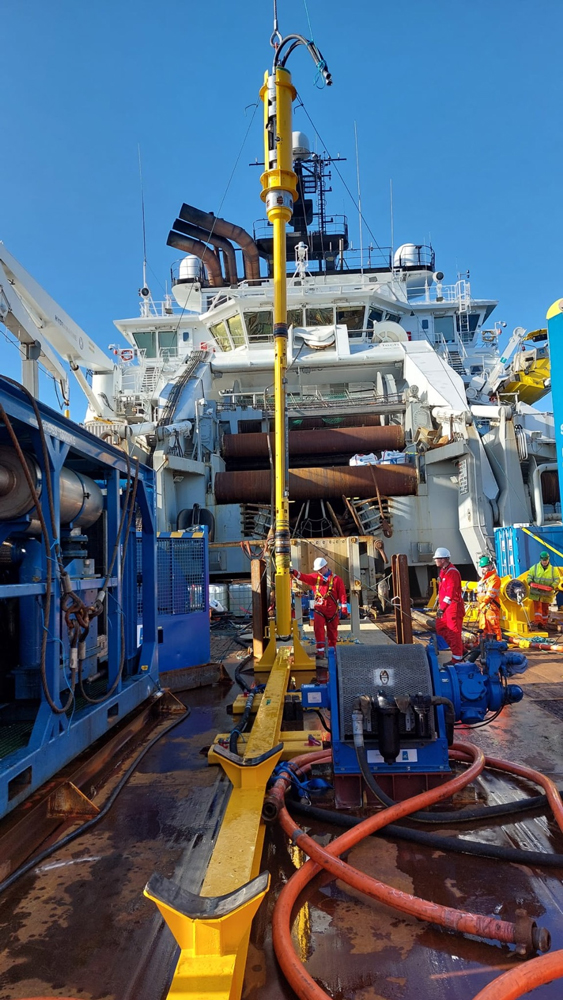
The proprietary SEABASS system was designed for environmental barrier placement in subsea wells. Developed by James Fisher and Sons, the system is modular and can be adapted for mudline well applications, using SEABASS‑MLS (Mud Line Suspension), which allows for anchoring and sealing inside larger internal diameter conductor strings.
Both versions of the system are designed for deployment from vessels via the moonpool or over the side. Its modularity enables perforation, circulation and cement placement for environmental barrier installation to be completed—thus removing the need for a mobile offshore drilling unit which, depending on the region, can be a significant six-figure cost per day when supporting a decommissioning campaign.
Regardless of the variant required for the particular well-type application, SEABASS has been designed with the operator and vessel provider in mind to increase project efficiency, reduce operational costs and minimize personnel exposure to hazards, Fig. 1.
COMMON GOALS, DIFFERENT REGULATIONS
Globally, regulators share the objective of effective isolation through standards-based, evidence-driven approaches, but differ in how new technologies are evaluated and adopted thanks to key differences in their regulatory frameworks.
In the U.S., the Bureau of Safety and Environmental Enforcement (BSEE) requires operators to demonstrate that new technologies provide equivalent or superior outcomes to conventional methods in terms of barrier integrity, verification and environmental protection before they can be deployed in the field. Alternative methods, such as rig-less well plug and abandonment (P&A), can provide additional options. Their use typically depends on collaboration between operators and the supply chain to demonstrate equivalence or improvement over conventional practices—typically with a detailed technical justification supported by a safety and risk assessment.
Ongoing debate around “idle iron” and proposed legislation updates show a strong interest in innovation when it supports BSEE’s requirements regarding long-term well integrity and the ability for the regulator to verify compliance.
In comparison, the UK’s North Sea Transition Authority (NSTA) builds on a standards-based approach with a performance‑based framework that actively encourages innovative approaches to achieve reductions in costs, emissions and offshore exposure, while meeting regulatory expectations on time and in full. The high number of late‑life assets on the UKCS has accelerated the adoption of rig-less abandonment technologies and campaign-based decommissioning approaches, designed to lower emissions and improve asset utilization without compromising well integrity. In the North Sea, vessel‑based well decommissioning systems exist alongside rig-based options across many approved decommissioning programs.
Australia’s National Offshore Petroleum Safety and Environmental Management Authority (NOPSEMA) promotes a technology-agnostic framework focused on outcomes. Operators must demonstrate that risks are reduced to as low as reasonably practicable (ALARP) and that environmental impacts are acceptable. New technologies are encouraged when they credibly achieve safe, timely and environmentally responsible permanent well abandonment. NOPSEMA has publicly highlighted the need for new technologies to address the growing backlog of redundant wells, as well as reducing reliance upon scarce mobile drilling rigs in region.
Across jurisdictions, the message is clear: innovation is welcome as a means of reducing emissions, cost and risk, but not simply for the sake of cost reduction. Innovative technologies gain traction quickest when they are supported by robust safety cases and strengthen confidence in long-term well integrity and environmental outcomes.
ENGINEERING THE SINGLE‑TRIP SOLUTION
SEABASS was developed to bridge the gap between light well intervention and conventional rig‑based abandonment, combining the operational flexibility required for vessel-based deployment with the capabilities required for long-term environmental barrier placement. It combines field-proven, passive-sealing technology with mechanically locking wellhead interfaces for maximum effectiveness.
Modularity is fundamental to the design philosophy, as no two wells are ever the same. All wells present unique challenges driven by age, integrity, damage and even incomplete documentation after decades of ownership changes. The system accommodates these variables through modular tooling configurations and the integration of standard, industry-wide tooling, such as external wellhead connectors, maximizing compatibility across diverse global well inventories.
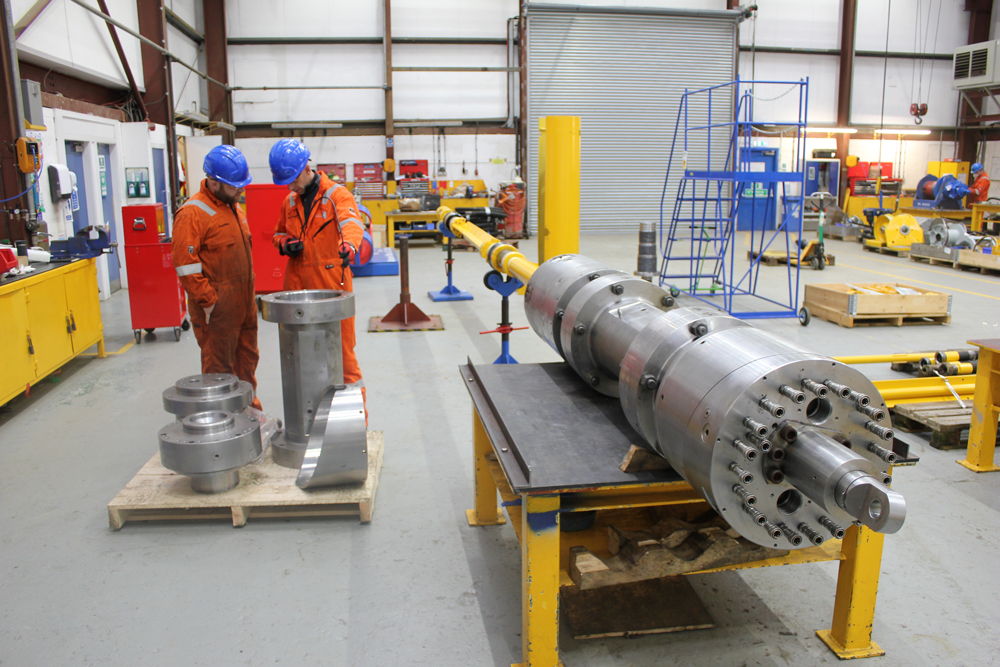
In subsea well configuration, the SEABASS system mechanically locks internally within the wellhead to provide a stable foundation for perforation, circulation and cementing operations. An external wellhead connection provides contingency engagement capability, while dual failsafe safety valves and a robust locking mechanism support well control throughout the operation.
A notable feature is its emergency disconnect and reconnect capability. In the event of vessel drive‑off or deteriorating weather conditions, SEABASS and SEABASS-MLS can be rapidly disconnected and reconnected while safely maintaining pressure and fluids in the wellbore. This capability is particularly valuable in regions (such as Southeast Asia) where local weather systems can cause extensive and repeated disruption to offshore operations, leading to non-productive time.
In addition, the system has no water depth limitations, while its modular capabilities enable ROVs to interface with the system in deepwater environments, giving a broader use profile with a wider array of well stock. The system is delivered fully assembled and tested, reducing offshore integration time and deck complexity relative to multi‑section alternatives, Fig. 2.
EFFICIENCY DRIVERS AND COST PERFORMANCE
Continual development of the SEABASS system for both subsea and mudline well applications has been made possible by specialists with considerable operational and engineering experience in both rig and vessel-based abandonment, including the challenges and opportunities enabled by both methodologies. This experience includes practical knowledge of traditional well P&A solutions – some of which have previously involved the technical specialists now within the decommissioning team at James Fisher.
Based on internal analysis, James Fisher estimates that the system can reduce operational time by up to 25%, compared with other vessel‑based well P&A systems.
Several engineering features underpin this efficiency. The system uses passive sealing elements, rather than inflatable packers, significantly reducing the time required for setting and unsetting operations. Given that typical abandonment scopes involve either single‑annulus (~1.5 days) or dual‑annulus (~2.5 days) operations, this benefit alone can contribute to a reduction of 12–16% in scheduled time.
As with any new technology, operational reliability is paramount to a project’s success. During decommissioning operations, inflatable packers can become damaged through regular use and take considerable time to replace. When sealing elements require replacement, this can typically be completed in around 30 min., compared with more complex sealing arrangements that can take hours to replace.
In addition, the physically shorter system length enables it to be supplied to the vessel, fully built and tested, avoiding multi‑part offshore assembly and delivering an estimated additional ~4% vessel time-saving. Pre-mobilization, onshore testing can also further reduce deck testing requirements.
When taken together, these design features further enhance reliability and optimize handling time, contributing to improved project uptime.
MANAGING UNCERTAINTY THROUGH EXPERIENCE
Subsea wells marked for abandonment are often poorly documented and may suffer from degraded integrity after decades of operation in harsh marine environments. An all-too-common challenge is finding out that the reality of the well schematics deviates from what’s been documented, often decades after drilling and when multiple well interventions have taken place.
The system has been developed with this challenging industry reality in mind. The system supports multi-barrier placement of environmental plugs, and its modular architecture suits both subsea and mudline well applications.
The approach is supported by James Fisher’s technical decommissioning team, which brings extensive experience in de‑risking such scenarios. These specialists operate globally and support customers with contingencies for a wide range of scenarios, enabled by a “decommissioning toolbox.” This encompasses everything from cutting and severance technologies to structure removal and recovery—including supporting systems, such as controlled flow excavation tooling.
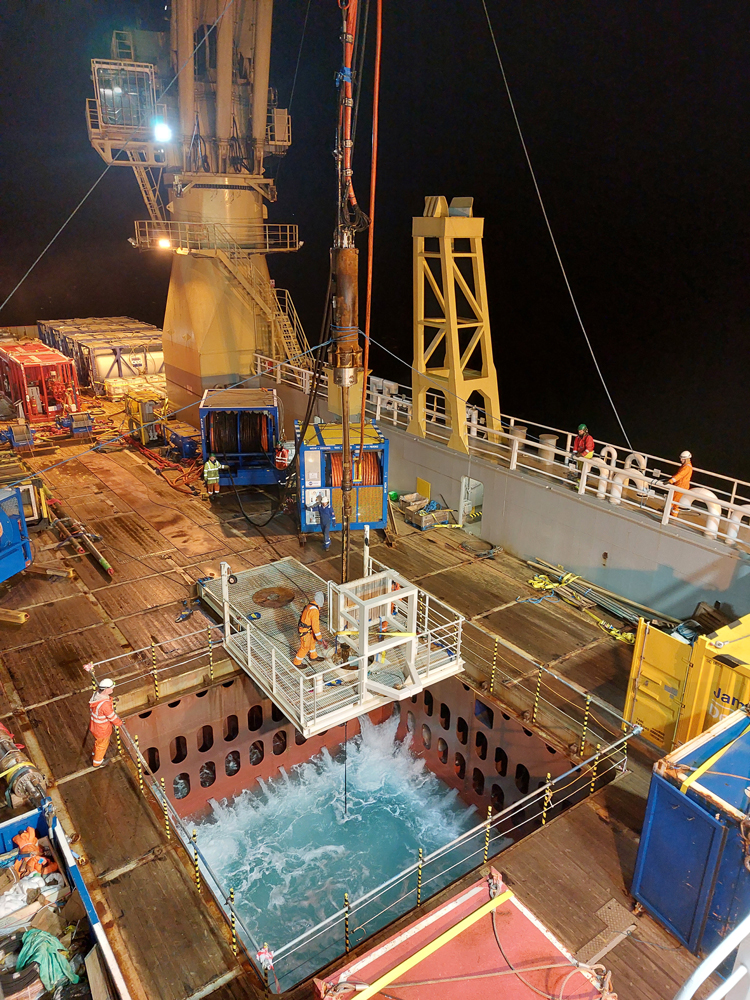
But it’s not just the technical capabilities that make such a difference. Collectively, team members have designed well abandonment methodologies and project managed and executed global projects in harsh environments worldwide, Fig. 3. James Fisher also carries forward this extensive decommissioning project management and delivery experience into the renewable energy sector, having completed the world’s largest and first-ever abrasive cut on a 10-m-diameter offshore wind monopile during 2025.
REGULATORY ACCEPTANCE
As we have seen in our regulatory comparison of BSEE (U.S.), NSTA (UK) and NOPSEMA (Australia), regulators require varying standards of proof to encourage the uptake of new technologies. Across regions, our analysis has shown that without credible, new technologies, the industry will struggle to meet decommissioning timelines safely and economically.
CASE STUDY: UKCS SUBSEA WELL ABANDONMENT
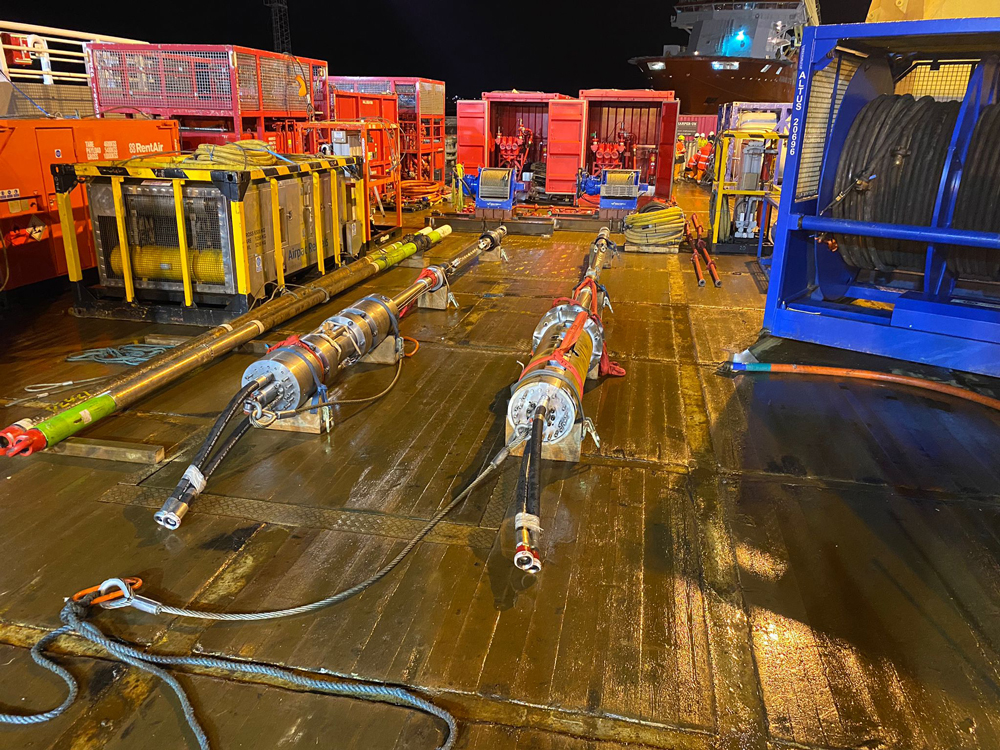
With a North Sea operator seeking a safe and cost-effective decommissioning approach for two wells, SEABASS was first deployed commercially on the UKCS in late 2022. James Fisher developed and safely executed a single‑trip abandonment program supporting permanent well abandonment. This allowed for the surface well structure to be removed without environmental contamination from well fluids.
Operations included the drifting and scraping of the well, with the system pressure-tested before perforation of the 13-3/8-in. casing. Oil-based mud (OBM) was flushed, and fluid returns were managed on the vessel, enabling a 300-ft environmental cement barrier to be placed. During this project, approximately 200 bbl of OBM were recovered from the 13-3/8-in. x 20-in. annulus. Back‑deck filtration allowed contaminated fluids to be managed offshore, avoiding costly port calls and benefiting productive time, Fig. 4. Both wells were abandoned safely and within the operational schedule.
BEYOND THE NORTH SEA
The feedback from this inaugural project has been vital in supporting continuous development. Operator concerns regarding the availability of a compact spread suitable for vessels with reduced deck space, for example, make both variants well suited to highly regulated legacy basins, such as Australia and Asia‑Pacific, where smaller vessels are often preferred.
The system is being considered for deployment in multiple regions, as operators seek scalable, field-proven and modular abandonment solutions, with the added reassurance of an internationally experienced decommissioning team.
LOOKING AHEAD: SUPPORTING MATURE WELLS THROUGH RIGLESS P&A
SEABASS and SEABASS‑MLS represent an evolving approach to well decommissioning, combining modular design and single‑trip efficiency to enhance operating safety, reduce project expenditure and support more efficient decommissioning of aging wells.
As well inventories continue to age, and the decommissioning burden grows, such technologies—backed by highly experienced decommissioning specialists—will be critical in enabling safe, timely and economically sustainable well abandonment worldwide.

RICHARD HENDERSON is Engineering Director (Decommissioning) at James Fisher Energy, a division of James Fisher and Sons. He leads the development and delivery of well abandonment and decommissioning solutions. Mr. Henderson holds a Master’s degree in Naval Architecture and Marine Engineering from Newcastle University. With extensive experience in well intervention, and rig‑based and rig-less plug-and-abandonment operations, he is closely involved in the engineering, commercialization and offshore delivery of technologies for subsea and mudline well decommissioning.
His work focuses on improving safety, reducing operational risk and enabling more efficient decommissioning through practical engineering solutions.
REFERENCES
- Bureau of Safety and Environmental Enforcement, 2026. Decommissioning. https://www.bsee.gov/decommissioning
- Columbia Center on Sustainable Investment, 2023. Decommissioning Offshore Oil and Gas Infrastructure in the Face of Climate Change and the Energy Transition. https://ccsi.columbia.edu/sites/ccsi.columbia.edu/files/content/docs/blog/ccsi-decommissioning-offshore-oil-gas-martin-dietrich-brauch-lockman.pdf
- International Association of Oil and Gas Producers, 2025. Decommissioning. https://www.iogp.org/workstreams/environment/decommissioning/
- James Fisher and Sons, 2026. Decommissioning North Sea subsea wells with SEABASS technology.
- Maritime Magazines, 2024. The Mounting Offshore Decommissioning Cost. https://www.maritimemagazines.com/offshore-engineer/202407/the-mounting-offshore-decommissioning-cost/
- NOPSEMA, 2023. Decommissioning Compliance Strategy 2024-2029. https://www.nopsema.gov.au/sites/default/files/documents/NOPSEMA%20Decommissioning%20Compliance%20Strategy%202024%20-%202029.pdf
- North Sea Transition Authority, 2025. Decommissioning Cost and Performance Update.
- https://www.nstauthority.co.uk/media/zvjbfauj/decommissioning-cost-and-performance-update-2025.pdf
- North Sea Transition Authority, 2026. Decommissioning. https://www.nstauthority.co.uk/regulatory-information/decommissioning/overview/
- Why decommissioning is really a waste management problem (June)
- Beyond the permit window: How data-led integrity is redefining offshore pipeline life extension (April)
- TAQA awards Brae Alpha major decommissioning contract (October 2025)
- Revolutionizing offshore decommissioning: Harnessing the power of the Wheel (June 2025)
- Oil's well that ends well: Recovering value, managing costs and reducing emissions during decommissioning (October 2024)
- Well decommissioning: Simple solutions to complex problems (June 2024)
- Subsea technology- Corrosion monitoring: From failure to success (February 2024)
- Applying ultra-deep LWD resistivity technology successfully in a SAGD operation (May 2019)
- Adoption of wireless intelligent completions advances (May 2019)
- Majors double down as takeaway crunch eases (April 2019)
- What’s new in well logging and formation evaluation (April 2019)
- Qualification of a 20,000-psi subsea BOP: A collaborative approach (February 2019)