The strategic imperative of remanufacturing: Driving efficiency and circularity in O&G operations
AMR WAHBA, Caterpillar Inc.
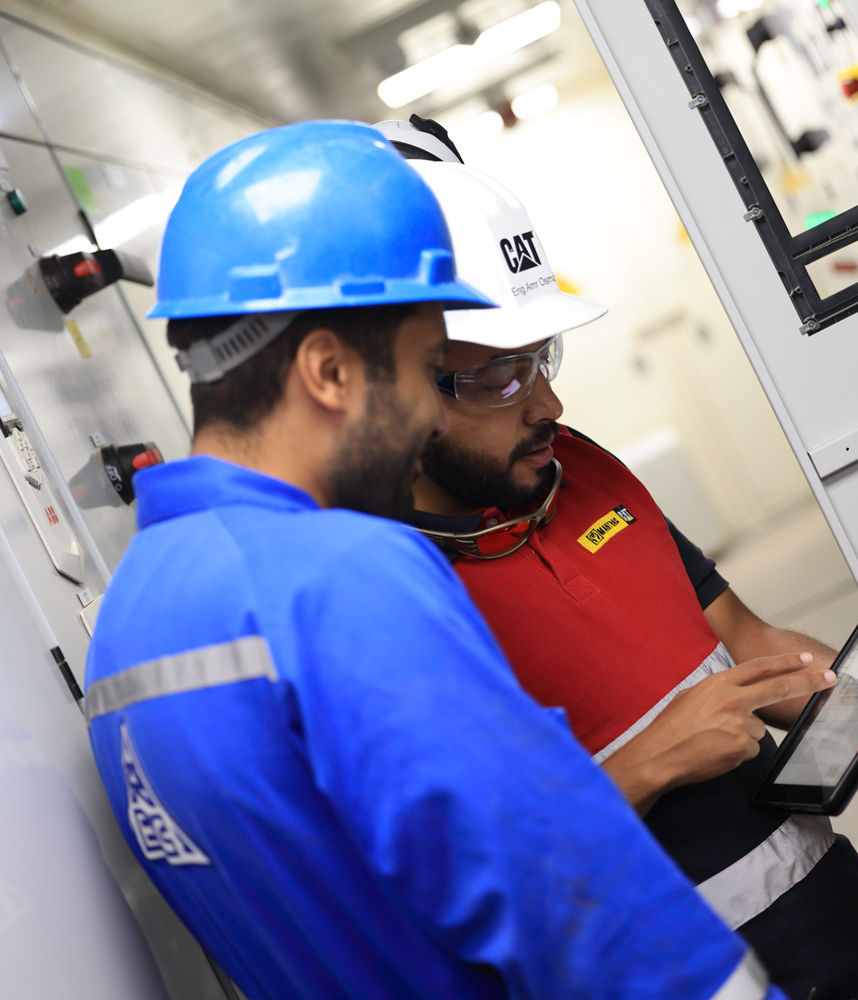
In the capital-intensive upstream and midstream sectors, the pursuit of operational excellence requires a sophisticated balance between cost mitigation and environmental stewardship. While traditional maintenance strategies often fluctuate between repair and replacement, the industrial process of remanufacturing has emerged as a critical lever for high-performance asset management. By integrating remanufactured components into equipment lifecycles, operators can reduce total cost of ownership, decrease downtime and support sustainability initiatives. This approach represents a fundamental shift toward a circular economy that preserves the value of raw materials and stabilizes the supply chain against potential global volatility.
THE DIFFERENCE BETWEEN REMANUFACTURING AND RECONDITIONING
Remanufacturing isn’t about putting used parts back into service or doing quick fixes on failed components. Instead, it embodies a refined and intensive process that returns end-of-life parts and engines (referred to as “cores”) to like-new condition. This differs significantly from both repair, which only fixes the damaged portion of a component, and reconditioning, which lacks standardized testing and can use a mix of aftermarket parts that deviate from original tolerances, Fig. 1.
The most effective remanufacturing processes employ one of three advanced cleaning techniques, based on usage and degree of wear, to remove contaminants and prepare the components for inspection: aqueous cleaning, mechanical cleaning and thermal cleaning.1
- Aqueous cleaning combines water and chemistry applications to clean the cores, using immersion tanks, cabinet washers, ultrasonics and flush stations.
- Mechanical cleaning uses mechanical force with equipment that can include dry blasts, slurry blasts, high-pressure blasts and vibratory bowls.
- Thermal cleaning typically uses high heat, but it can also involve salt baths and fluidized beds, if necessary.
After cleaning, components are inspected and salvage techniques applied to restore parts to original performance quality and apply critical engineering upgrades. Those techniques may include laser cladding, machining and possibly milling. Once restored, a thorough inspection verifies the equipment adheres to current OEM specifications and confirms the quality of the remanufactured part.
USING REMANUFACTURED PARTS TO LOWER COSTS AND GHG EMISSIONS
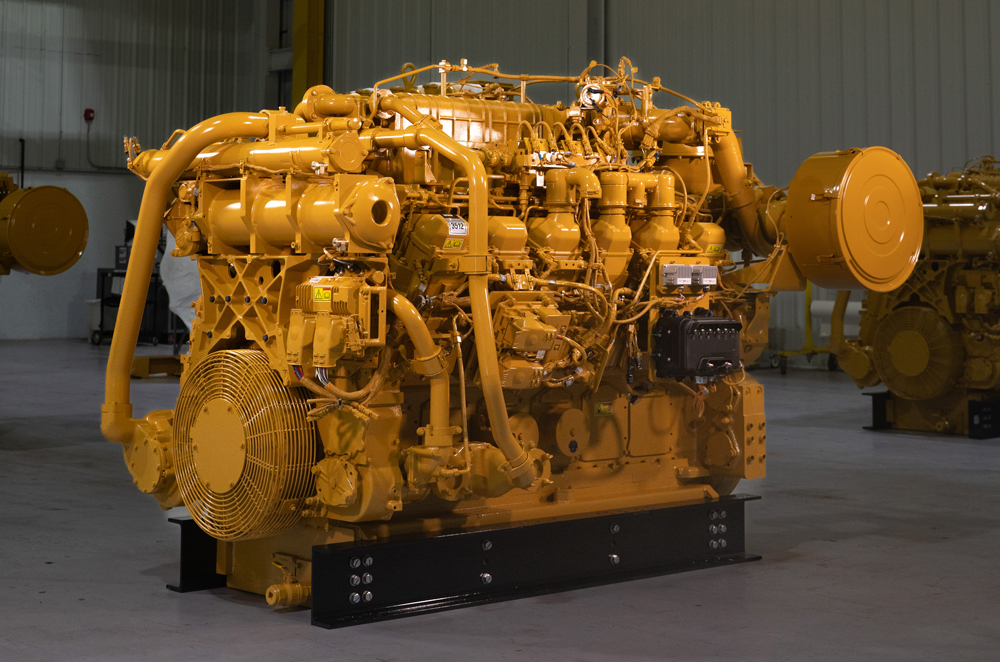
Returning core equipment to operation and leveraging remanufactured parts helps operators meet operational and sustainability objectives. Since remanufacturing enables operators to reclaim the energy and labor invested in the original iron, the cost savings can be substantial: as much as 45% to 85% of the cost of new parts for Cat® Reman components, when an end-of-life core is returned.2 Cat Reman also employs more than 80 unique Caterpillar patents for remanufacturing processes, to ensure OEM quality and like-new performance, Fig. 2.3
In addition to reducing OpEx, the remanufacturing process itself results in 65% to 87% less GHG emissions and energy use and 80% to 90% less new raw materials used, compared to manufacturing new parts.4 This is a powerful indicator that remanufacturing helps operators holistically support their sustainability initiatives while promoting greater profitability.
This impact is illustrated by a major drilling company operating in Saudia Arabia and the United Arab Emirates (UAE), Fig 3. The driller sought to demonstrate its commitment to its sustainability initiatives while also minimizing operating costs. By implementing a structured core-return and remanufacturing program, the company successfully returned 71,900 lbs of material to the manufacturing stream through Cat Reman, resulting in a cost savings of 37.8%, compared with purchasing new parts. The drop-in-ready components also helped the company minimize downtime while ensuring consistent performance in the field.
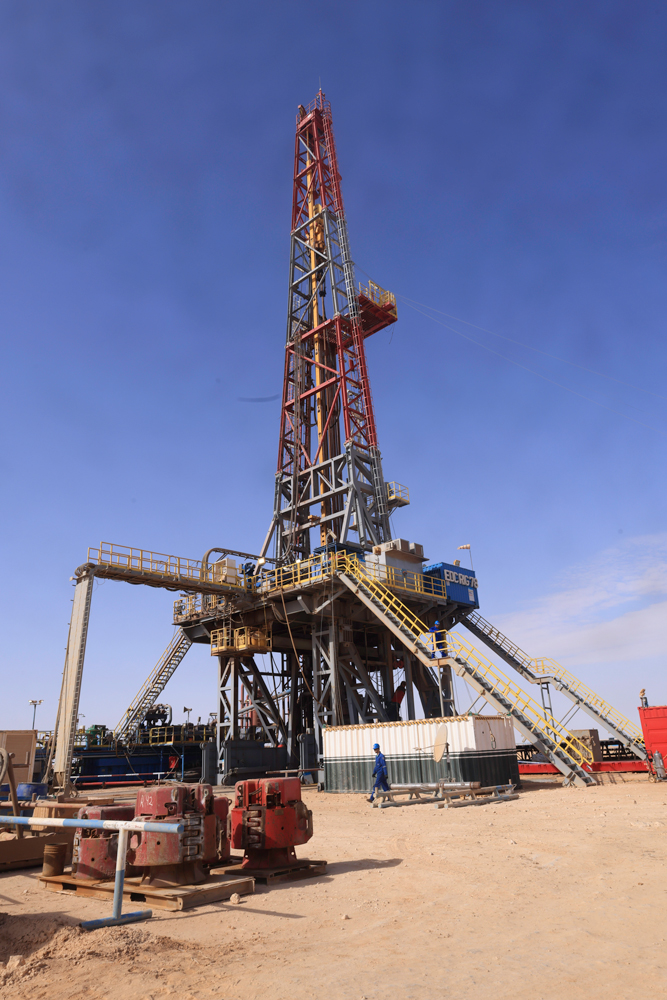
A hydraulic fracturing company’s operations in Saudi Arabia also exemplify the positive impact of incorporating a remanufacturing program into routine maintenance procedures. The reuse, reduce, recycle nature of remanufacturing enabled the company to meet the sustainability objectives of its national oil company (NOC) customer. The pressure pumping operator also reduced downtime during overhauls by at least four weeks, by using Cat Reman engines as drop-in replacements, which supported greater pumping hours.
The technological upgrades applied to remanufactured components can also yield further benefits. For example, operators can purchase complete engines, as well as components that include critical technology updates. This helps lower total cost of ownership while enhancing performance.
LEVERAGING REMANUFACTURED COMPONENTS TO OPTIMIZE SUPPLY CHAIN LOGISTICS AND MINIMIZE DOWNTIME
Beyond cost and performance advantages, remanufacturing helps optimize an operator’s supply chain throughout the equipment lifecycle. In the oil and gas sector, downtime can cost thousands of dollars per hour. Remanufacturing promotes faster part availability by reducing the typical long lead times often associated with rebuilding parts. This enhances lifecycle-based asset management and helps operators’ competitiveness.
When operators can capitalize on a global inventory and distribution network, the supply chain transforms from a traditional model to an exchange model, which offers greater speed and accessibility. This can afford shorter lead times, due to the drop-in readiness of OEM components, compared to rebuilding a part, which involves additional steps. This allows critical equipment to be returned to service at a faster rate for greater uptime. Operators can also minimize on-hand inventory spares, which unlocks OpEx revenue for other priorities.
When remanufacturing is integrated early into the supply chain strategy, operators can not only plan maintenance cycles with greater precision but also maximize the value of the core that will be returned. This proactive approach creates opportunities to optimize operational efficiency and minimize global supply chain impacts that could create raw material or shipping constraints.
SECURING LONG-TERM ASSET INTEGRITY AND LIFECYCLE VALUE
Remanufacturing effectively implements the circular economy philosophy within the oil and gas industry in a practical and seamless way. Instead of the common “take, make, use and dispose” model, remanufacturing creates a regenerative system with closed-loop cycles, keeping materials and equipment in use as long as possible and allowing oilfield companies to extract maximum value from capital equipment.
Keeping premium materials such as iron and steel in the field for multiple lifecycles not only drives down OpEx and CapEx, but it also supports sustainability initiatives for operators and the industry as a whole. More importantly, this is achieved while maintaining the reliability that oil and gas operations demand. Embracing remanufactured solutions is no longer simply a maintenance choice or preference; it’s a strategic decision that aligns fiscal and sustainability objectives. The end of a component’s first life is just the beginning of its next high-performance cycle.
REFERENCES
- Cat.com. How We Reclaim and Salvage Equipment Parts. 29 September 2023, https://www.cat.com/en_US/blog/how-we-reclaim-and-salvage-equipment-parts.html.
- Cat.com. The Cat® Reman Difference. https://www.cat.com/en_US/products/new/parts/reman/the-cat-reman-difference.html.
- Cat.com. The Remanufacturing Process. https://www.cat.com/en_US/products/new/parts/reman/the-remanufacturing-process.html.

- Represents U.S. environmental impacts of gate-to-gate remanufacturing and remanufacturing processes for Cat engines and components, as defined in the 2018 United Nations Environment Programme report, “Redefining Value – The Manufacturing Revolution.” Does not include impacts elsewhere in our value chain.

AMR WAHBA is the regional manager for EAME for Caterpillar Inc., where he brings more than 30 years of expertise to his role. He works closely with NOCs, IOCs and industry partners to support their operational goals.
FROM THE ARCHIVE- Subsea technology- Corrosion monitoring: From failure to success (February 2024)
- Applying ultra-deep LWD resistivity technology successfully in a SAGD operation (May 2019)
- Adoption of wireless intelligent completions advances (May 2019)
- Majors double down as takeaway crunch eases (April 2019)
- What’s new in well logging and formation evaluation (April 2019)
- Qualification of a 20,000-psi subsea BOP: A collaborative approach (February 2019)