U.S. drilling to remain disciplined in 2026 amid flat rigs, steady output
IVY DIAZ, Digital Editor
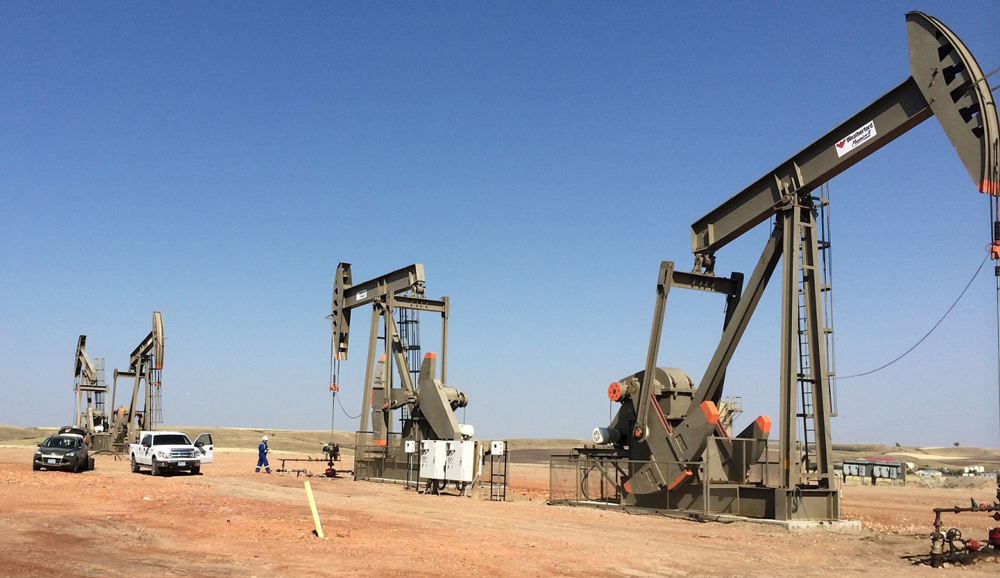
Moving into 2026, U.S. drilling is showing restraint, defined by lower rig counts, steady production and continued consolidation across key shale basins. Operators have maintained output through efficiency gains—including longer laterals and advanced completions—even as softer oil price expectations and stubborn service costs reinforce cautious capital spending, Fig. 1. M&A activity accelerated in the second half of 2025 and early 2026, particularly in the Permian and gas-focused basins, as companies pursued scale, inventory depth and LNG-linked growth rather than aggressive expansion.
Natural gas demand tied to LNG exports and power generation remains a key long-term driver, supporting measured development in regions such as the Haynesville and Appalachia. Offshore activity in the U.S. Gulf continues to benefit from long-cycle projects and renewed leasing momentum, while regional trends vary widely across the Rockies, Midwest and West Coast. Overall, the outlook for 2026 points to stable production, modest drilling declines and a continued emphasis on capital discipline and operational efficiency.
U.S. MARKET FACTORS
A number of factors have figured into the current level of U.S. E&P activity. These include geopolitical influences, LNG demand, M&A activity, production levels and commodity prices.
Geopolitical influences. Geopolitical shifts in late 2025 and early 2026 have played a growing role in shaping U.S. drilling decisions, influencing everything from leasing policy and capital allocation to commodity price expectations. The return of a more production-focused federal policy stance under the Trump administration has created a markedly different operating outlook compared with prior years, particularly for offshore and federal-land drilling.
One of the most direct influences has been the administration’s push to expand domestic oil and gas production through leasing and permitting changes. New federal directives to accelerate offshore lease sales, reopen acreage in Alaska and review permitting timelines have improved long-term visibility for producers, particularly in the U.S. Gulf and on federal lands in the West. This policy shift has encouraged operators to revisit deferred projects and maintain drilling inventories, even as near-term rig activity remains disciplined.
Internationally, ongoing instability in major producing regions—including the Middle East and parts of Eastern Europe—has sustained a geopolitical risk premium in global oil markets. While this has supported U.S. production economics, price volatility has also made operators cautious about committing capital to long-cycle drilling programs in certain areas, including offshore.
Due to ongoing tariff pressures and supply-chain realignment, operators continue to adopt a “do more with less” approach, sustaining production through efficiency gains rather than significant rig count expansion.
LNG MARKET
Rising global LNG demand remains a significant factor shaping the U.S. upstream. Expansion of LNG infrastructure and exports are increasingly guiding infrastructure investment, natural gas drilling activity and long-term supply strategies.
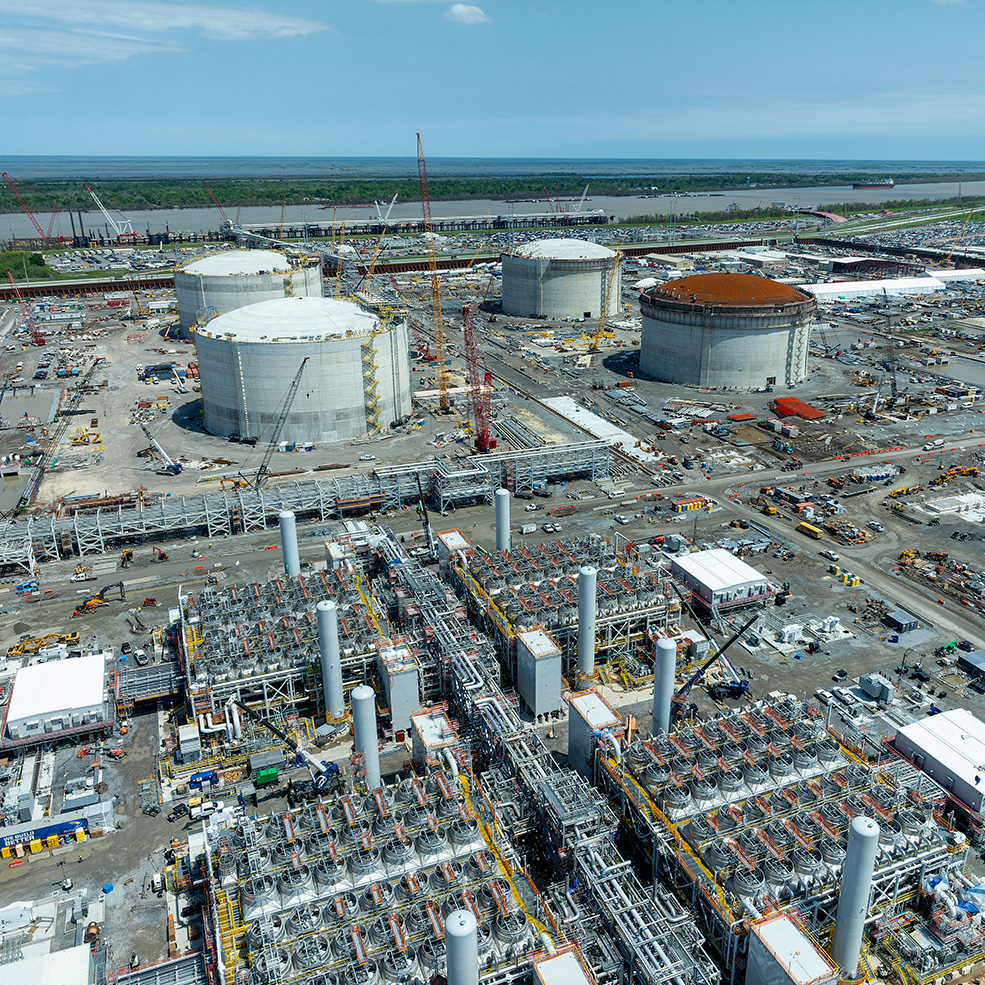
Major U.S. LNG projects to watch include ongoing expansion work at Venture Global’s Plaquemines LNG project in Louisiana (Fig. 2), new capacity ramp-up at the Golden Pass LNG export project on the Texas Gulf Coast, and continued buildout of Corpus Christi Stage III. Together, these projects are driving expectations of rising U.S. LNG export capacity and reinforcing demand for feed gas from basins, such as the Haynesville and Permian. Overall, recent sustainability and energy-transition initiatives have created a complex operating environment in which regulatory adjustments and expanding LNG demand are supporting long-term drilling confidence, even as companies remain disciplined on near-term activity.
MERGERS & ACQUISITIONS (M&As)
Upstream merger and acquisition activity during second-half 2025 and early 2026 continued to reshape the U.S. drilling landscape, with consolidation focused on scale, inventory depth and LNG-linked gas demand. Large shale combinations—including SM Energy’s roughly $13-billion merger with Civitas Resources and Crescent Energy’s $3-billion acquisition of Vital Energy—highlighted the ongoing push to build larger, more capital-efficient operators capable of sustaining disciplined drilling programs across the Permian and other core basins.
Gas-weighted consolidation also accelerated, underscored by Antero Resources’ acquisition of HG Energy and Mitsubishi’s multibillion-dollar purchase of Aethon Energy’s Haynesville assets, both tied to strengthening, long-term demand for U.S. natural gas and LNG exports. Meanwhile, offshore-focused deals, such as Harbour Energy’s purchase of Gulf of Mexico operator LLOG Exploration signaled renewed international investment in deepwater assets. Collectively, these transactions reflect a shift toward fewer, larger and better-capitalized producers prioritizing returns, operational efficiency and long-term drilling inventory rather than rapid production growth, reinforcing consolidation as a defining theme shaping U.S. oil and gas activity.
Oil production. According to the U.S. Energy Information Administration (EIA), U.S. crude oil production strengthened through the second half of 2025, reaching record levels by year-end, Fig. 3. Monthly EIA data show production rising steadily through Q4 2025, averaging roughly 13.8–13.9 MMbpd in October–December, marking the highest quarterly levels on record and lifting full-year 2025 output to about 13.59 MMbpd.
The EIA expects U.S. crude production to remain near this record level in 2026, averaging only about 20,000 bpd less than 13.59 MMbpd, essentially flat year-over-year as efficiency gains offset a small decline in drilling activity. Output growth that drove gains in recent years—particularly from the Permian basin—is expected to slow, with production remaining steady in 2026 before edging lower in 2027, if current price and drilling trends persist.
Oil prices. The EIA expects softer global balances to pressure crude prices in 2026. In its latest Short-Term Energy Outlook, the agency forecasts Brent crude to average roughly $55–$58/bbl in 2026, down from about $69/bbl in 2025, as global supply growth outpaces demand and inventories build. U.S. WTI prices are projected to average roughly $51–$53/bbl in 2026, compared with about $65/bbl in 2025, reinforcing expectations for flatter U.S. production and disciplined drilling activity.
World Oil projects these numbers to be slightly higher, at $57.15 for Brent in 2026, and $54.25 for WTI.
Overall, the EIA outlook points to record-level but plateauing U.S. oil production heading into 2026, with lower price expectations and slower growth likely to moderate drilling expansion, even as output remains historically high.
Natural gas supply/demand. U.S. natural gas fundamentals remain supported by steady demand growth and rising LNG exports, even as production plateaus. Enverus Intelligence Research notes that roughly 14–15 GW of retired U.S. coal capacity could be repowered with natural gas, particularly at sites with existing pipeline access, creating incremental demand for upstream supply. The U.S. Energy Information Administration (EIA) estimates dry gas production averaged about 117 Bcf/d in 2025 and expects output to remain essentially flat or dip slightly to around 116–117 Bcf/d in 2026, as disciplined drilling and slower associated-gas growth temper supply gains.
On the demand side, expanding LNG capacity and continued power-sector consumption are expected to tighten balances. The EIA projects Henry Hub prices to rise from roughly $3.50–$3.80/MMBtu in late 2025 to about $4.20–$4.40/MMBtu in 2026, supporting a more constructive outlook for gas-weighted drilling in basins such as the Haynesville and Appalachia even as overall production growth remains modest.
U.S. RIG COUNT
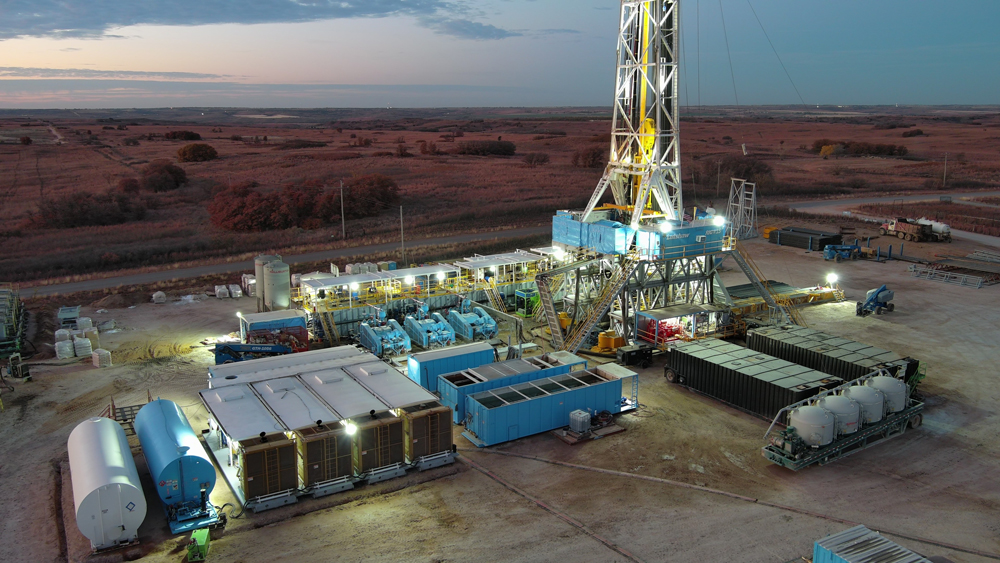
U.S. drilling activity remained subdued through late 2025 and into early 2026. According to Baker Hughes data, the U.S. rig count averaged in the low-to-mid-540 range at year-end 2025, down noticeably from roughly 620 rigs at the start of 2024 and well below prior-cycle highs. Entering early 2026, the active rig count has generally hovered around 540–550 rigs, indicating a largely flat activity outlook.
The year-over-year decline has been driven primarily by fewer oil-directed rigs, particularly in the Permian, where operators continue to prioritize efficiency and returns over volume growth. Oil rigs have trended lower than 2024 levels, while natural gas rigs have shown more stability and occasional increases tied to improving gas prices and LNG-driven demand. Overall, the current forecast cycle points to relatively flat U.S. rig counts through 2026, with production expected to be sustained more by productivity gains and longer laterals than by significant increases in drilling activity.
U.S. WELLS FORECAST/TRENDS
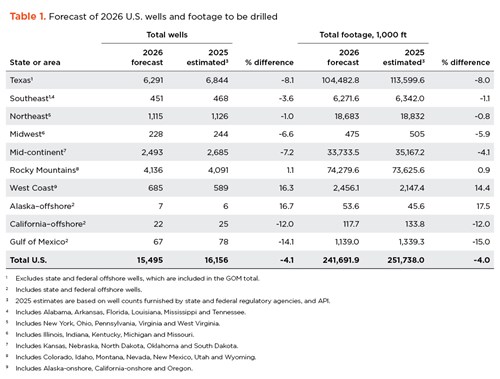
The above-mentioned factors, along with World Oil’s surveys of operators and state agencies, have all shaped this U.S. forecasting process. Accordingly, World Oil predicts that both U.S. drilling and footage will decline by 4% in 2026, Table 1 and Fig. 4. We expect 15,495 wells and 241.7 MMft of hole.
U.S. GULF OF AMERICA/MEXICO
According to the EIA, the U.S. Gulf of America/Mexico accounted for roughly 13–14% of total U.S. crude oil production in 2025, a share expected to remain relatively stable through 2026, as new deepwater projects and subsea tie-backs offset natural declines from mature fields. Offshore Gulf production remains one of the most stable sources of U.S. crude supply, supported by long-cycle developments brought online in 2024–2025 and additional startups expected over the next several years. For natural gas, the Gulf’s contribution is far smaller, representing roughly 1% of total U.S. marketed natural gas production. Several recent field startups and ongoing project ramp-ups have helped sustain offshore volumes and partially offset declines from aging infrastructure.
U.S. Gulf activity over the past year has been shaped by a combination of capital discipline, renewed leasing and steady deepwater project momentum. Operators continue to favor lower-risk development programs over frontier exploration, directing capital toward sanctioned projects, subsea tie-backs and infrastructure-led growth that can deliver reliable returns in a volatile price environment. Federal policy has also shifted the offshore outlook, with the U.S. Department of the Interior holding an offshore lease sale for the Gulf in late 2025, the first under the Trump administration’s updated leasing mandate. It generated roughly $300 million in high bids and signaled renewed industry interest in future drilling inventory.
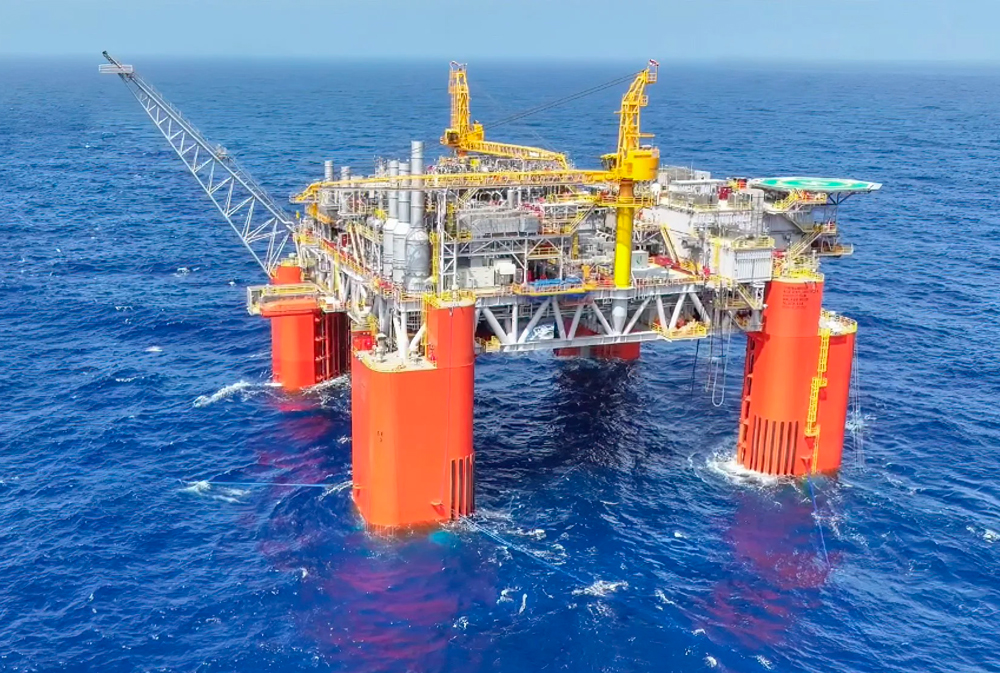
Deepwater execution remains strong: LLOG Exploration achieved first oil from its Salamanca FPU in September 2025, helping offset declines from legacy assets. And back in July, Beacon Offshore Energy began production Shenandoah field, Fig. 5. The company then ramped up output from all the wells to reach 100,000 bopd during October. A Phase 2 development is on tap this year.
Meanwhile, UK-based Harbour Energy’s $3.2-billion acquisition of LLOG marked a significant new international investment in the region. Together, these developments underscore a Gulf sector focused on disciplined growth, long-cycle project delivery and sustained production stability, rather than rapid exploration expansion.
Wood Mackenzie analysts predicted producers to bring on roughly 300,000 bopd of new production in 2025 and a further 250,000 bopd in 2026, as major developments and tie-backs come online across the region. These additions are expected to push Gulf output back above 2 MMbopd, marking one of the basin’s strongest growth periods in years and helping offset slower growth from onshore shale.
Wood Mackenzie also expects Gulf deepwater production to reach a record level approaching 2.5 MMboed in 2026, reflecting the culmination of long-cycle investments in projects such as Anchor, Whale, Shenandoah and other subsea tie-backs.
Despite steady activity in the region, World Oil expects drilling to decrease 14.1%, and footage will be down 15% in the U.S.
TEXAS
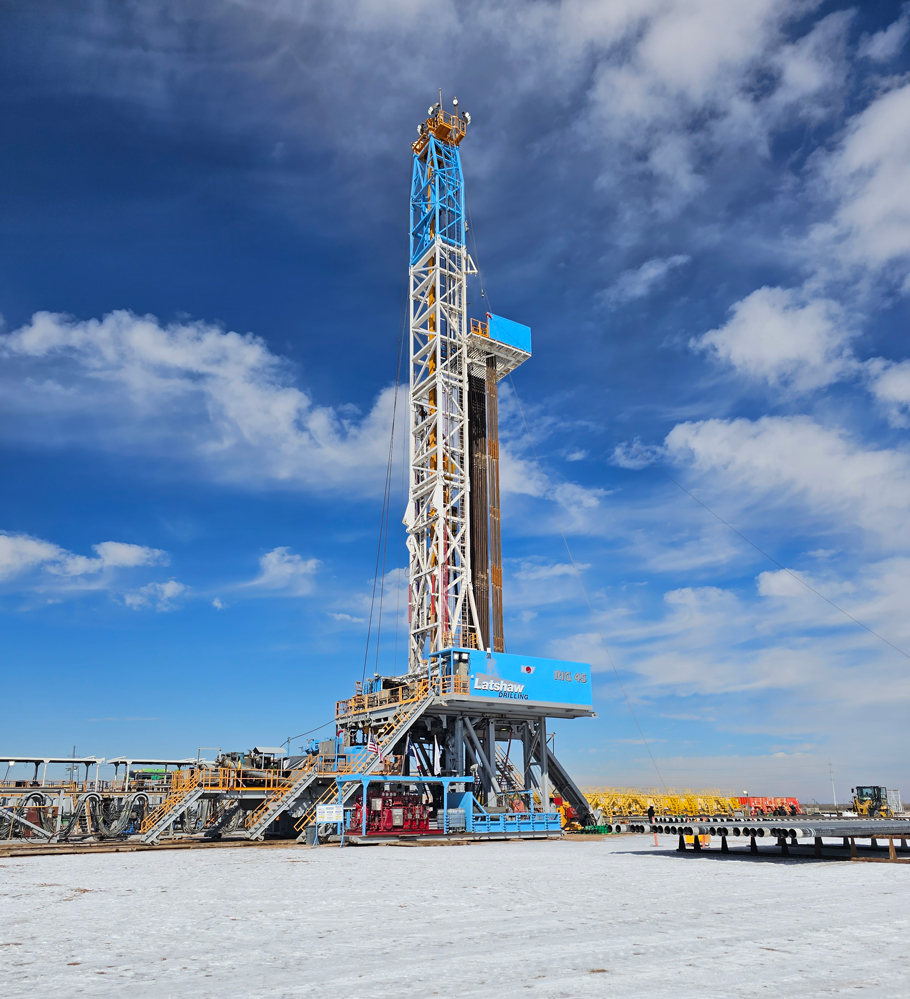
In Texas, World Oil anticipates just one of the 12 Railroad Commission districts to be up during 2026, while 11 districts are expected to be down, Fig. 6.
In our September 2025 forecast round, World Oil anticipated Texas drilling to decline 6.5% and footage to fall about 6.7%. In reality, wells drilled fell 11.3%, as producers cut back faster than expected, and footage was down 7.3%, reflecting that footage per well continues to increase. Texas’ dominant role in U.S. drilling remains consistent in early 2026, with the state accounting for roughly 42% to 43% of total drilling, based on Baker Hughes’ latest rig counts. We expect Texas drilling and footage to both decrease by 8% during 2026.
Permian basin. Texas remained the center of U.S. drilling and upstream dealmaking in the second half of 2025 and early 2026, driven largely by continued Permian development and consolidation among shale producers. Activity in the Permian stayed resilient, despite lower rig counts, as operators relied on longer laterals, pad drilling and high-efficiency completions to sustain record production levels.
M&A remained a defining theme, highlighted most recently by the $58-billion all-stock merger of Devon Energy and Coterra Energy, announced in February 2026. The Devon-Coterra deal will create one of the largest U.S. shale producers and underscores the ongoing consolidation wave across the unconventional sector. The combination significantly expands Devon’s footprint in the core Delaware basin, bringing together nearly 750,000 net acres and more than a decade of high-quality drilling inventory, much of it at sub-$40 break-even levels.
Other notable M&A deals include Crescent Energy’s roughly $3-billion acquisition of Permian-focused Vital Energy and the $12.8-billion all-stock SM Energy–Civitas combination, both aimed at expanding core acreage and extending drilling inventory. These deals reflected a broader push toward scale and capital efficiency across Texas shale plays, with companies prioritizing disciplined development of existing positions rather than aggressive exploration. While rising service costs and tariff-related supply chain pressures tempered drilling growth, the Permian continued to anchor U.S. oil production and investment, reinforcing Texas’ dominant role in national upstream activity.
SOUTHEAST
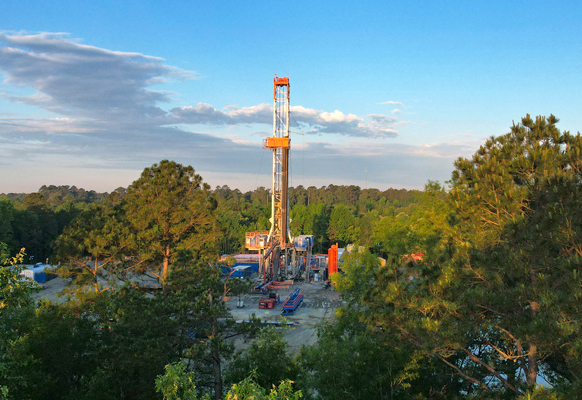
Activity across the Southeast U.S., particularly in the Haynesville shale, remained centered on disciplined gas development and LNG-driven investment in the second half of 2025 and early 2026. Comstock Resources reported stronger gas-driven earnings and continued solid drilling results while moving forward with the $430-million sale of its East Texas Shelby Trough assets, sharpening its focus on core Haynesville and Bossier development, Fig. 7. At the same time, Black Stone Minerals and Caturus Energy advanced long-term basin growth by signing a multi-year drilling agreement covering roughly 220,000 acres across the Haynesville and expansion areas, aimed at sustaining production to meet rising Gulf Coast and export demand.
International investment has also accelerated, highlighted by Japan’s JERA entering the play through a $1.5-billion acquisition of the South Mansfield asset in Louisiana, underscoring growing global interest in U.S. natural gas supply linked to LNG markets. Also, Mitsubishi Corporation entered the U.S. shale gas market with its $5.2-billion acquisition of Aethon Energy’s Haynesville assets in Louisiana and Texas, adding about 2.1 Bcfd of gas production.
World Oil’s forecast expects both drilling and footage in Louisiana to increase slightly by 1.2% in first-half 2026. As a region overall, World Oil anticipates the Southeast to decrease in 2026, with 3.6% fewer wells, and 1.1% less footage drilled, compared to 2025.
NORTHEAST
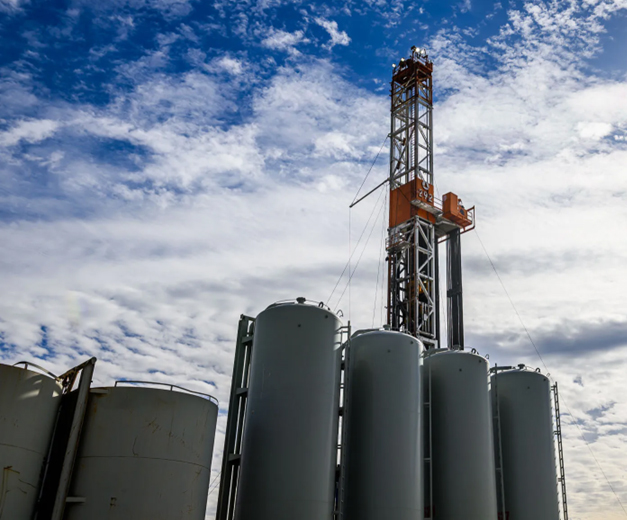
Activity in the Northeast during the second half of 2025 and early 2026 remained steady-but-disciplined across the Marcellus and Utica shales, as operators maintained measured drilling programs focused on efficiency and cost control to sustain production amid ongoing market uncertainty, Fig. 8. Continued expansion of U.S. Gulf Coast LNG export capacity reinforced the region’s role as a foundational long-term natural gas supply basin, supporting development, even as rising service costs, equipment lead times and regulatory scrutiny in Pennsylvania and Ohio encouraged cautious drilling schedules.
M&A activity also reshaped the Appalachian landscape, highlighted by Antero Resources’ $2.8-billion acquisition of HG Energy’s Marcellus assets alongside an $800-million divestiture of its Utica position, a move that sharpens its Appalachia focus heading into 2026. Additional consolidation included Northern Oil and Gas (NOG) and Infinity Natural Resources’ $1.2-billion purchase of premium Utica assets, Vickery Energy’s acquisition of Tribune Resources’ Appalachian gas properties, and Infinity’s $36-million expansion of its Pennsylvania dry-gas footprint, all underscoring continued investment in core inventory and long-life gas production tied to LNG-driven demand.
New York continues to maintain one of the strictest regulatory environments in the U.S. for upstream oil and gas. High-volume hydraulic fracturing remains banned statewide, and there have been no new shale drilling programs in the Marcellus portion of New York despite ongoing activity across the border in Pennsylvania. Therefore, World Oil estimates that New York drilling will be down a further 8.3% in 2026, and footage will decrease by 6.2%.
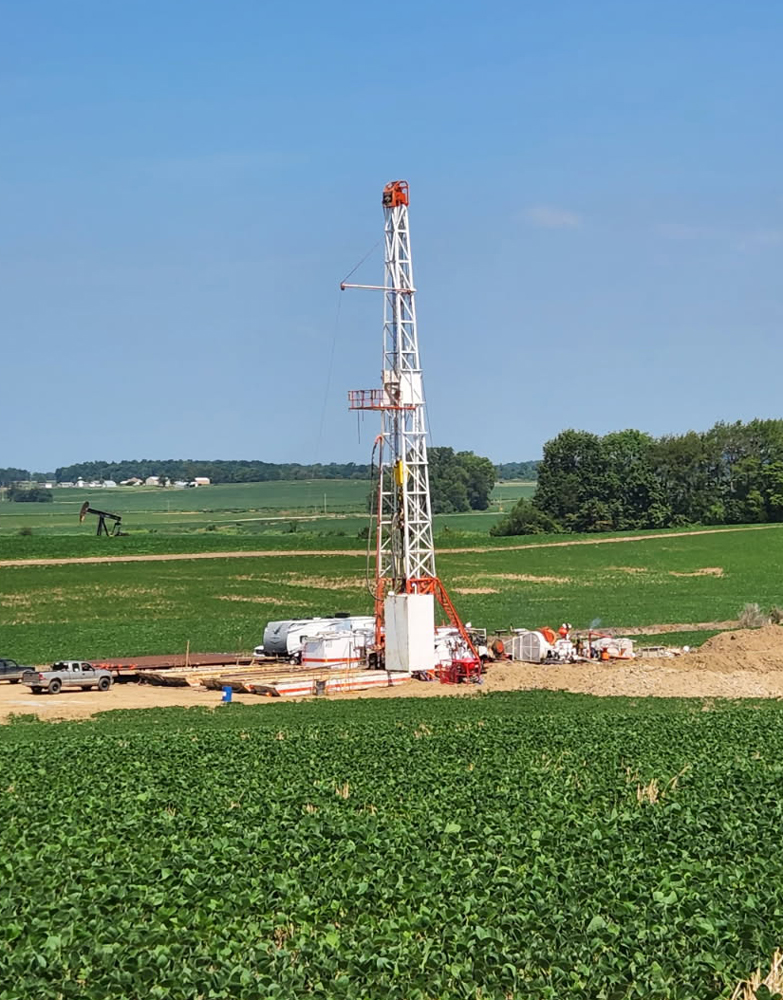
Ohio is expected to see a 6% decrease in both drilling and footage, while West Virginia drilling activity is expected to drop about 7%. World Oil forecasts a 3.9% increase in Pennsylvania, and Virginia activity will remain flat.
MIDWEST
Activity across the Midwest remained modest and highly localized, with most drilling concentrated in smaller conventional programs in places like the Illinois basin, Fig. 9. Overall rig counts and new-well activity in the region stayed relatively low, compared with major U.S. basins, reflecting mature resource plays, capital discipline and modest price-driven investment incentives.
Illinois, Indiana and Kentucky saw limited new drilling, with activity centered on conventional oil fields and incremental workovers rather than new exploration. Production in the region showed mostly double-digit losses, as small independents pursued low-cost infill drilling where economics allow. Michigan’s activity remained focused on legacy gas fields and storage operations, with little new upstream drilling reported.
World Oil anticipates a 6.6% decrease in wells, and a 5.9% decrease in footage drilled in the Midwest region during 2026.
MID-CONTINENT
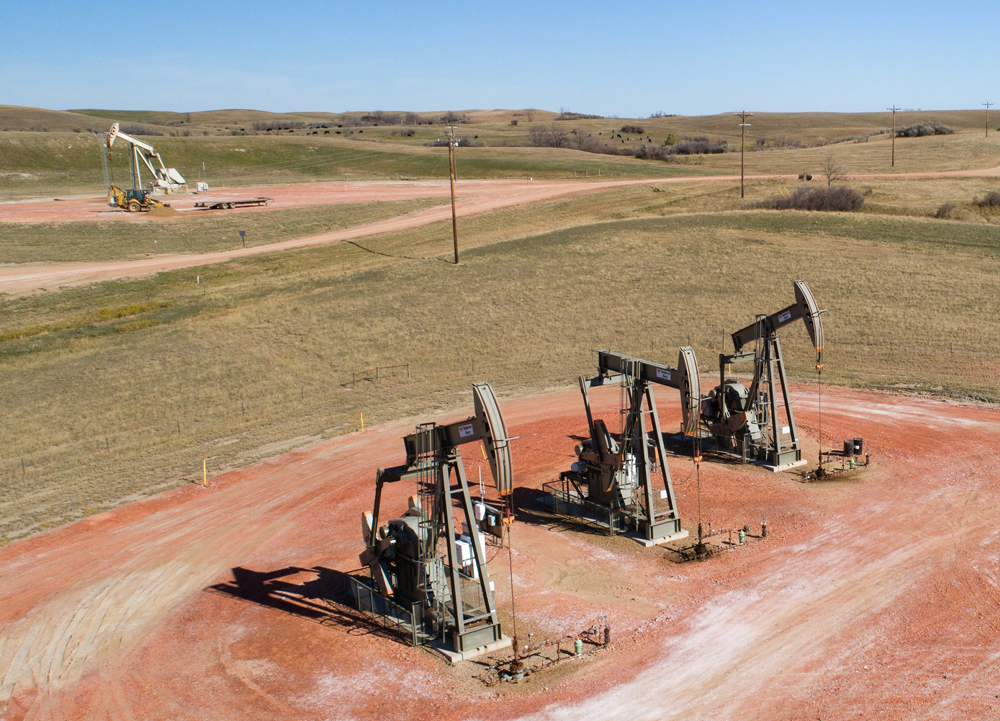
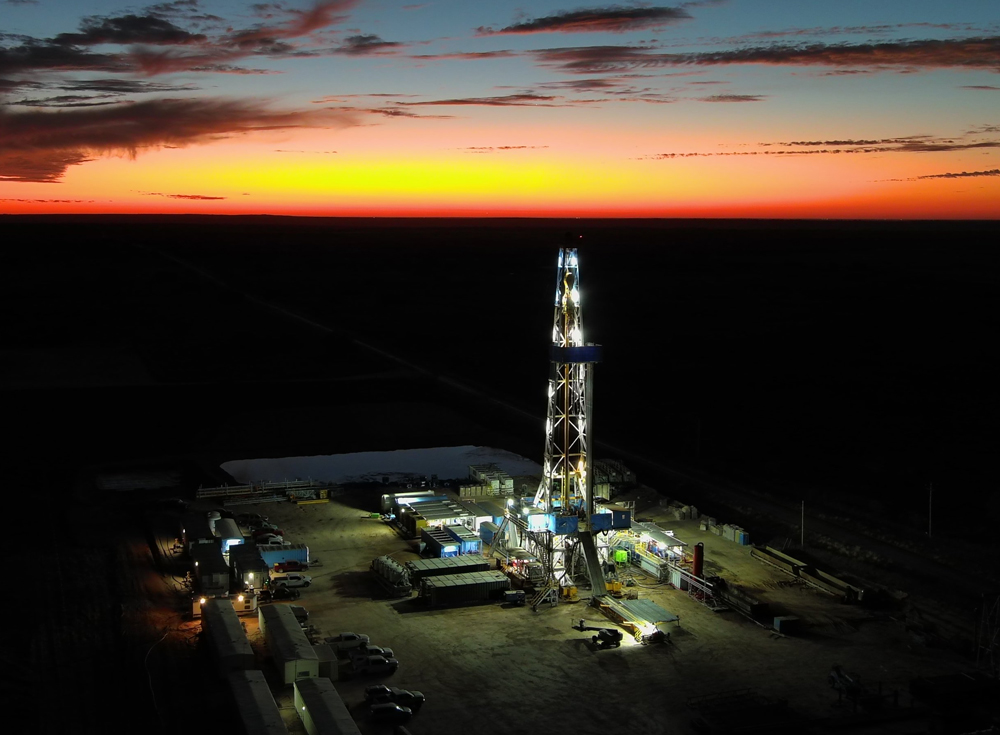
Activity across the Mid-Continent region remained steady but uneven in the second half of 2025 and early 2026, with the Bakken shale continuing to anchor production, even as drilling slowed. North Dakota and Oklahoma (Fig. 10) remained the region’s top oil and gas producers, supported by established infrastructure and core inventory, but Bakken drilling activity moderated as weaker crude prices and rising competition from Canadian barrels squeezed operator margins.
Industry leaders, including Continental Resources founder Harold Hamm, warned in early 2026 that tightening economics and lower price realizations were prompting a pause or slowdown in some Bakken drilling programs, reinforcing a broader shift toward capital discipline and efficiency-focused development. Despite the softer drilling pace, production has remained relatively resilient, due to longer laterals and improved completion performance.
Kolibri Global Energy boosted production at its Tishomingo field in Oklahoma to more than 6,000 boed in late 2025, as new Barnes and Velin wells began flowing back, highlighting continued incremental growth from core Mid-Continent drilling programs. Elsewhere in the Mid-Continent, activity in Kansas, Nebraska and South Dakota remained limited to small-scale conventional programs and maintenance drilling, underscoring the region’s dependence on the Bakken and Oklahoma plays for meaningful upstream growth.
Overall, the Mid-Continent region will see a 7.2% drop in well count and a 4.1% drop in footage drilled in 2026.
ROCKY MOUNTAINS
Recent activity across the Rocky Mountains region reflects a mix of portfolio optimization, selective acquisitions and steady-but-disciplined drilling. Crescent Energy continued to streamline its Rocky Mountain exposure in late 2025, advancing a broader $900-million non-core divestiture program with the sale of non-operated DJ basin assets, while Zephyr Energy expanded its regional footprint through the acquisition of mature producing assets and additional development acreage across core Rocky Mountain basins. In Wyoming, operators maintained strong permit inventories but deployed fewer rigs, underscoring how capital discipline and commodity-price uncertainty continue to shape drilling decisions.
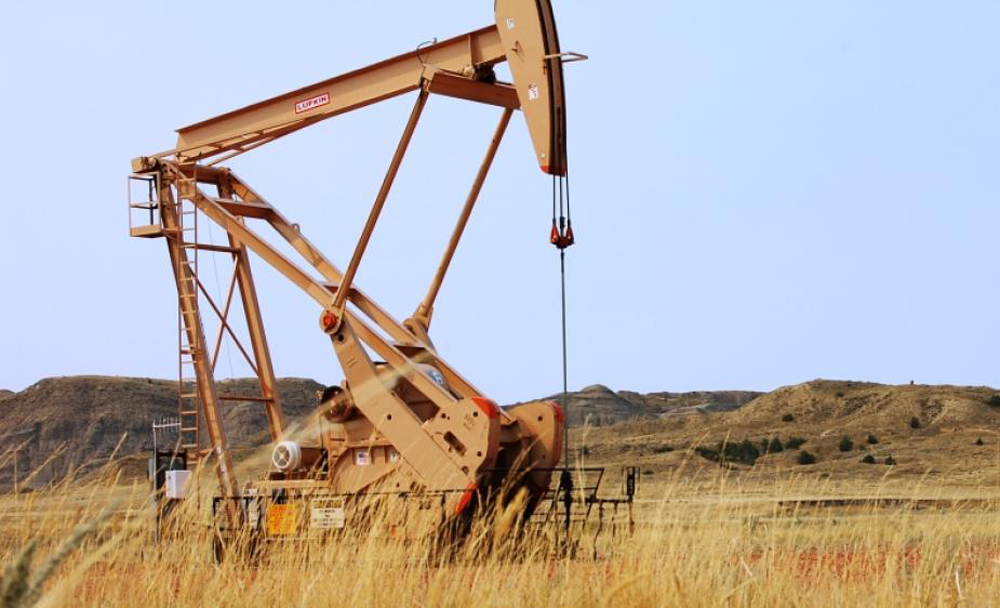
Activity elsewhere in the region has remained measured, with horizontal drilling expansion in Utah’s Uinta basin supported by improved well productivity and longer laterals, and new BLM lease sales covering more than 70,000 acres, opening additional development opportunities ahead of 2026 drilling cycles. Overall, rig counts across the Rockies are expected to remain relatively flat, with stable-to-modest production trends. World Oil expects both drilling and footage in the Rockies to increase by a slight 1.1% moving into 2026, Fig. 11.
WEST COAST
Recent activity across the West Coast region has been driven largely by Alaska’s production growth and policy shifts. On Alaska’s North Slope, development momentum remains strong, with ConocoPhillips advancing its multibillion-dollar Willow project—now estimated at up to $9 billion and targeting first oil by early 2029—while the Nuna and Pikka Phase 1 developments are expected to drive the state’s largest oil production increase in decades, with EIA forecasts pointing to a roughly 13% rise in output during 2026.
Federal policy changes have further reshaped the Alaska outlook, including the rollback of drilling restrictions across the National Petroleum Reserve and the reopening of additional Coastal Plain acreage for leasing, expanding long-term development opportunities across the region. Considering continued industry and regulatory advances, World Oil expects Alaska’s onshore well count and footage drilled to rise by 10.1% and 11.2% respectively, and offshore Alaska activity is expected to see a 17% jump.
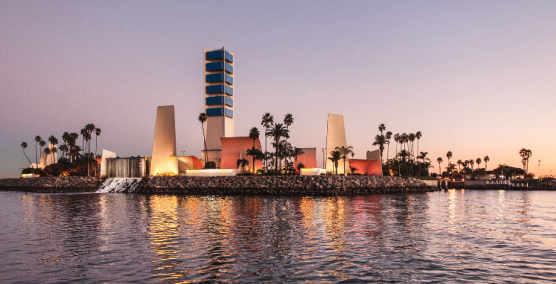
In contrast, California’s upstream outlook remains constrained by regulatory and political dynamics, with federal efforts to revisit offshore leasing and infrastructure debates facing strong state opposition, leaving onshore production largely tied to mature fields and offshore prospects uncertain., Fig. 12.
New regulations passed by California’s state assembly last year were intended to encourage more drilling, so that the state produces more of its own oil and keeps what refineries it still has. Unfortunately, this kind of thinking has not done the state much good. Indeed, Valero, on Jan. 31, 2026, abruptly shut down its Benicia refinery, four months earlier than planned. Still, given the regulatory changes last year, we expect California’s drilling and footage to be up 17.7%, while offshore wells will be off 12.0%.
Accordingly, regional drilling, overall, should see a 16.3% increase, with footage up 14.4%.
Related Articles- International E&P shows the way forward (February)
- Middle East jackup fleet continues to shrink following Saudi suspensions (February)
- A decent year is on tap for Canada, featuring neither boom nor bust (February)
- Washington outlook: Federal oil and gas policy shifts noticeably toward the industry (February)
- First Oil: Celebrating our 100th year of forecasting (February)
- Drilling advances: Bottlenecks? What bottlenecks? (January)
- Subsea technology- Corrosion monitoring: From failure to success (February 2024)
- Applying ultra-deep LWD resistivity technology successfully in a SAGD operation (May 2019)
- Adoption of wireless intelligent completions advances (May 2019)
- Majors double down as takeaway crunch eases (April 2019)
- What’s new in well logging and formation evaluation (April 2019)
- Qualification of a 20,000-psi subsea BOP: A collaborative approach (February 2019)