Intent Topics (Technical Content Only)
- Hydraulic Fracturing Equipment & Services
- Electric Completion Fleets (e-Frac)
- Proppants & Frac Sand
- Completion Chemicals & Fluid Systems
- Well Integrity & Inspection Compliance
- Methane Detection & Emissions Reporting
- Flaring Reduction & Vapour Recovery Technology
- Subsea Production Systems & Trees
- FPSO Mooring & Marine Systems
- Subsea Umbilicals Risers & Flowlines (URF)
- Perforating Systems & Charges
- Electric Submersible Pumps (ESP)
- Rod Lift & Progressing Cavity Pumps
- Gas Lift Systems & Equipment
- Oilfield Electrification & Power Infrastructure
- Produced Water Treatment & Reuse
- Subsea Integrity & Inspection Systems
- Reservoir Modeling & Project Design Software
- Reservoir Characterization & Formation Evaluation
- Exploration Technology & Seismic Data Services
- Managed Pressure Drilling (MPD) Equipment & Services
- Rotary Steerable & Directional Drilling Systems
- Drill Bits & Downhole Cutting Tools
- Wellbore Casing & Liner Design Systems
- Drilling Data Analytics & Real-Time Operations
- Enhanced Oil Recovery (EOR) Technology & Chemicals
- Production Chemicals & Flow Assurance
- Production AI & Inspection Robotics
- Blowout Prevention Equipment & BOP Systems
- Well Intervention & Workover Services
- Coiled Tubing Services & Equipment

Article
June
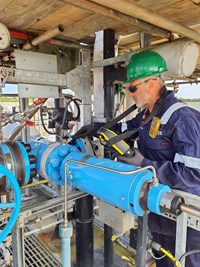
Permanent magnet motors attract powerful savings for existing ALS technologies
Article
June
The fundamental objective of late-life field management remains the safe production and containment of hydrocarbons. To ensure this, effective well integrity is critical.

Article
Sponsored Content
June
For operators managing pumpjacks, compressors, rotating equipment, and processing facilities, the shift to usage-based maintenance presents a practical opportunity to reduce costs while improving reliability.

Article
June
Severe gas slugging in unconventional Permian basin wells creates unstable intake conditions that can disrupt ESP operation and reduce run life. Field results show that the Hydro-Helical™ Slugger gas separator from Summit ESP®, a Halliburton service, reduced the duration and frequency of no-flow events, improved pump stability, lowered motor temperatures, and increased productive pumping time.
Article
May
In this Executive Viewpoint, Aramco’s Khalid Y. Al Qahtani outlines how the company is deploying satellites, drones and advanced digital monitoring tools to detect methane emissions and strengthen leak detection efforts across its operations.

Article
May
Biosurfactant chemistry is gaining favor among many operators for a number of good reasons, including their ability to reduce operational complexity and improve efficiency.

Article
May
Upstream electrification continues to progress apace, as it helps to provide simplification of systems, reliability of operations and cost reductions in the field, says Baker Hughes executive Rodrigo Farias.
Article
May
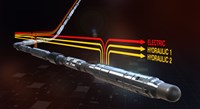
In deepwater and multizone developments, traditional hydraulic intelligent completions can limit economic optimization, due to control-line scale, installation time, and delayed interval-control valve response. Simplified intelligent completion architectures address these constraints by reducing infrastructure complexity, shortening critical‑path rig time, and allowing rapid, bidirectional zonal control without production shut‑in.
Article
Sponsored Content
April
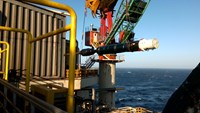
Tubing hanger installation remains a risk-sensitive phase of subsea well construction. Dependencies on conventional methods increase execution risk, personnel exposure, and critical path time. This article presents an umbilical-less tubing hanger installation model supported by the Enhanced Remote Operated Control System (eROCS) and the Optime Tubing Hanger Orientation System (OTHOS). Results from the Norwegian Continental Shelf confirm reduced system complexity, fewer interfaces, and predictable execution with accurate orientation.
Article
April
A detailed investigation using BSEE Data for all the ultra-deepwater projects committed to the Lower Tertiary Wilcox play reveals financial consequences that accompany the high risks and limitations of the subsea field development systems deployed there.