Offshore Venezuela gas project advances as Eni, Repsol secure export pathway
(Bloomberg) – Eni SpA and Repsol SA plan to start exporting natural gas from Venezuela by the end of 2031 after reaching a deal with Caracas to revive a long-stalled effort to expand production from a massive offshore field.
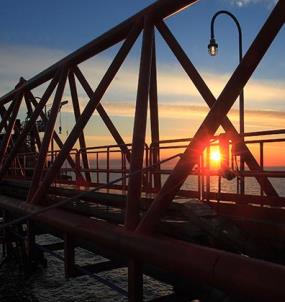
The agreement with interim President Delcy Rodríguez will enable the companies to more than double production at the field in the Gulf of Venezuela and export the fuel as liquefied natural gas from a floating terminal, according to people familiar with the matter.
Eni and Repsol also received assurances they’ll be compensated for billions of dollars worth of gas they’ve pumped for Venezuela at the field over the years but weren’t paid for, the people said.
It is a significant victory for the European companies, which have long pushed to export gas from the prolific field, sticking with the 20-year-old project through years of political turmoil. The deal comes as the Iran war has cut off about 20% of the world’s supply of liquefied natural gas and as the Trump administration is easing sanctions in Venezuela to allow companies to rebuild its crumbling energy infrastructure.
Eni, based in Italy, confirmed in a statement that the companies reached an agreement with Venezuela to increase gas production and start exporting, drawing on its past experience with floating LNG terminals. Repsol, based in Spain, declined to comment. PDVSA didn’t respond.
The deal was signed in mid-March, but the details were not made public, the people said. Eni and Repsol plan to submit a final development plan to Petróleos de Venezuela SA by June, according to the people who declined to speak publicly because the matter is private.
Venezuela has focused for more than a century on its oil reserves, which are among the largest in the world, when it comes to energy production. But the nation also has bountiful offshore gas deposits.
Eni and Repsol discovered the massive Perla field in 2009, in shallow waters near Venezuela’s border with Colombia. It holds an estimated 17 trillion cubic feet of gas, making it one of the largest gas discoveries in Latin America.
The companies jointly developed it with the intention of exporting gas. Their deal with Venezuela, however, called for Eni and Repsol to supply the nation’s domestic market from the field before sending any fuel abroad. Over the years the companies struggled to reach an agreement with Venezuela over exactly how much the domestic market needed.
The field currently produces about 585 million cubic feet of gas per day, supplying power plants, petrochemical facilities, factories and homes in Western Venezuela. Eni and Repsol’s new agreement with the government allows the companies to start exporting once they’re supplying 645 million cubic feet per day for domestic use, the people said.
Eni and Repsol plan to install two more platforms in the field by 2028 and start exporting once they reach 1.2 billion cubic feet per day of production, the people said. The companies’ agreement with Venezuela extends their lease to operate the field from 2036 to to 2051, the people said.
Floating LNG export terminals are relatively rare, used mostly in remote locations or when there are obstacles to building on land. They can be faster to build but present complex engineering challenges that can make them difficult to finance and develop.
Eni has experience with the technology in Congo and Mozambique. The company is also developing a project with Argentina’s YPF SA using two floating vessels.