Why U.S. can’t simply reopen Hormuz or seize Kharg Island amid Middle East conflict
(WO) — As the Middle East conflict continues to disrupt global oil and LNG flows, panelists at CERAWeek by S&P Global pushed back on two questions gaining traction in energy circles: why doesn’t the U.S. simply intervene with force to reopen the Strait of Hormuz, or seize Iran’s Kharg Island export hub?
The panel, “War in the Middle East: U.S. Policy, strategy and implications,” moderated by Carlos Pascual of S&P Global Energy and featuring Kristin Diwan of the Arab Gulf States Institute, Admiral James Ellis of Stanford University and former U.S. Navy Strategic Command, and David Satterfield of Rice University’s Baker Institute, framed the issue as far more complex than it may appear.
“What we’re facing just from an oil perspective previously was 20 million barrels plus-or-minus that was transiting the strait,” Pascual said. “There’s about 5 million [barrels] right now… and you still have a disruption that has 10-to-12 million barrels a day, something which is just absolutely massive.”
With roughly 800 vessels backed up on either side of the Strait of Hormuz and LNG production stalled, due to an inability to move cargoes, Pascual pointed to mounting physical constraints in the market.
Against that backdrop, Pascual posed a direct question: Why not use U.S. military force to reopen the strait?
“Well, if only it were so simple,” said Admiral Ellis.
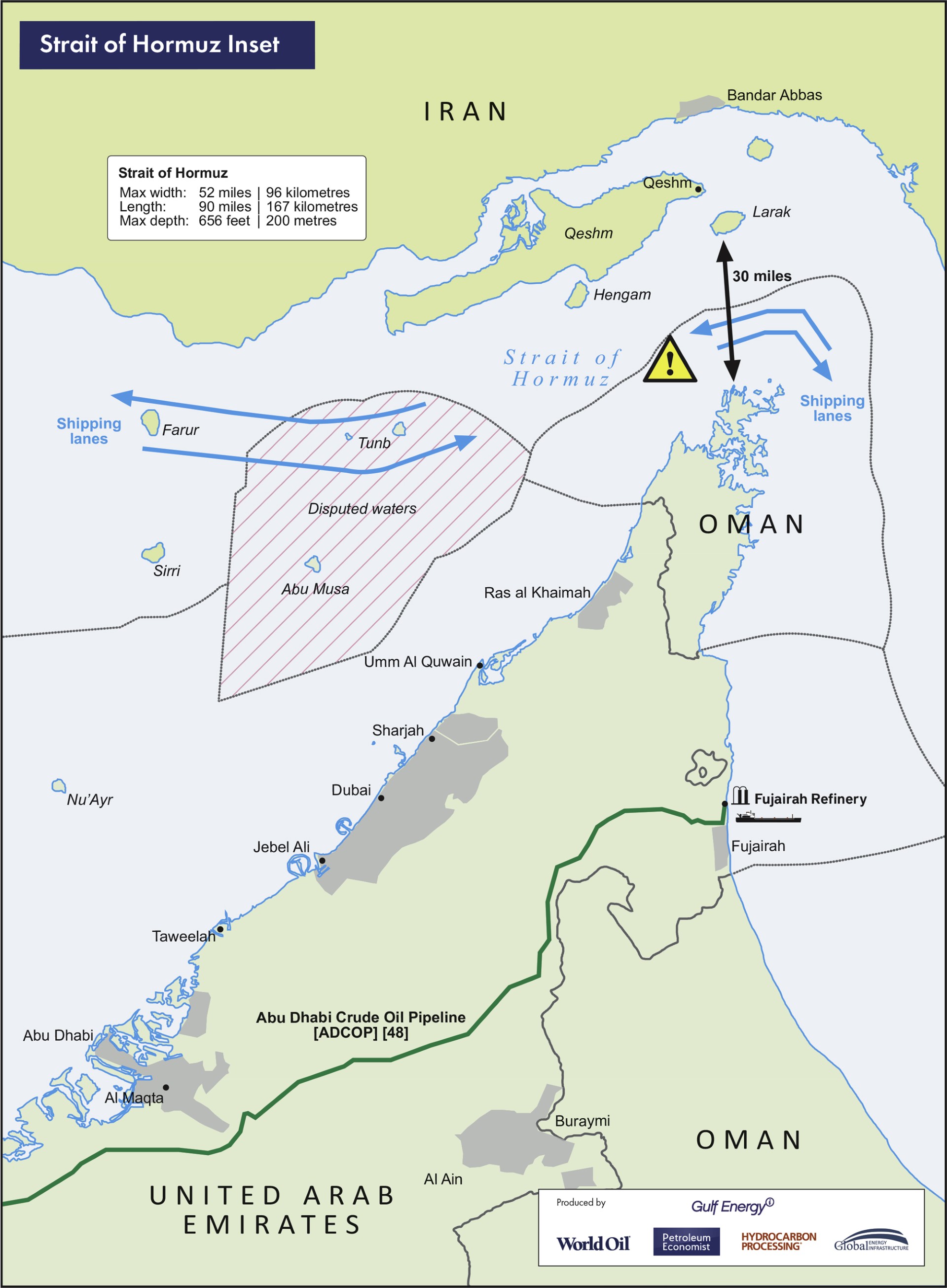
He pointed to a layered threat environment that includes cruise and ballistic missiles, fast-attack boats and increasingly sophisticated naval mines. “The mine threat is there… it’s much more sophisticated than what people think,” Ellis said. “It’s not just steaming a ship through there.”
Even for the U.S. Navy, maintaining open passage would require continuous, resource-intensive operations. “It would require 24-hour surveillance, aircraft in the air, a different set of supporting vessels,” he said, adding that the same vulnerabilities facing commercial shipping also apply to military vessels. In such an environment, he warned, “the enemy only has to get lucky once.”
The lack of a clear diplomatic or strategic end-state further complicates any military option, Satterfield added. “I have no doubt points have been exchanged,” he said of U.S.-Iran contacts. “That does not constitute a negotiation.”
Satterfield said the U.S. continues to pursue long-standing objectives around Iran’s nuclear and missile programs, but “the Iranians have agency here… [and] believe they’re winning,” limiting the likelihood that pressure alone will produce a quick resolution.
Diwan echoed that view, noting that Tehran’s position has hardened rather than softened amid the conflict. “I don’t think it’s a position that they’ve managed to get right now that they’re going to very easily surrender,” she said, pointing to Iran’s broader ambition to expand its influence across the Gulf.
Pascual then raised a second, more aggressive option: Could the U.S. seize Kharg Island as a way to force an end to the conflict?
Admiral Ellis cautioned that such a move could escalate rather than resolve the situation.
“You have to ask yourself, what’s the strategy behind holding that?” he said, noting that Kharg Island sits high up in the Gulf, close to Iran’s coastline, and shares many of the same vulnerabilities as ships operating in the region—except it cannot be moved.
“I don’t think that the loss of Kharg Island is going to do anything other than have Iran in turn attack the oil and gas infrastructure of our allies and partners in the Gulf,” Ellis said. “You may get the island, but you may lose the war.”
For energy markets, the panel’s conclusion was clear: while military options exist in theory, the risks of escalation, operational complexity and potential for wider infrastructure attacks make them far from straightforward solutions—leaving global supply exposed to prolonged disruption.
Top photo: Carlos Pascual (left), S&P Global Energy, moderates a CERAWeek panel on Middle East conflict and U.S. policy with Kristin Diwan, Arab Gulf States Institute; David Satterfield, Rice University’s Baker Institute; and Admiral James Ellis, Stanford University. Image: S&P Global