Interior’s Burgum sees U.S. energy agenda proceeding as planned
(WO) - The third day of CERAWeek by S&P Global 2026 started off Wednesday with a fascinating, wide-ranging discussion conducted with U.S. Secretary of the Interior Doug Burgum by interviewer Dan Yergin, Chairman of CERAWeek and Vice Chairman of S&P Global. Given an opportunity from Yergin at the session’s start to frame the discussion, Burgum emphasized the important role that the industry plays in the ongoing global energy situation.
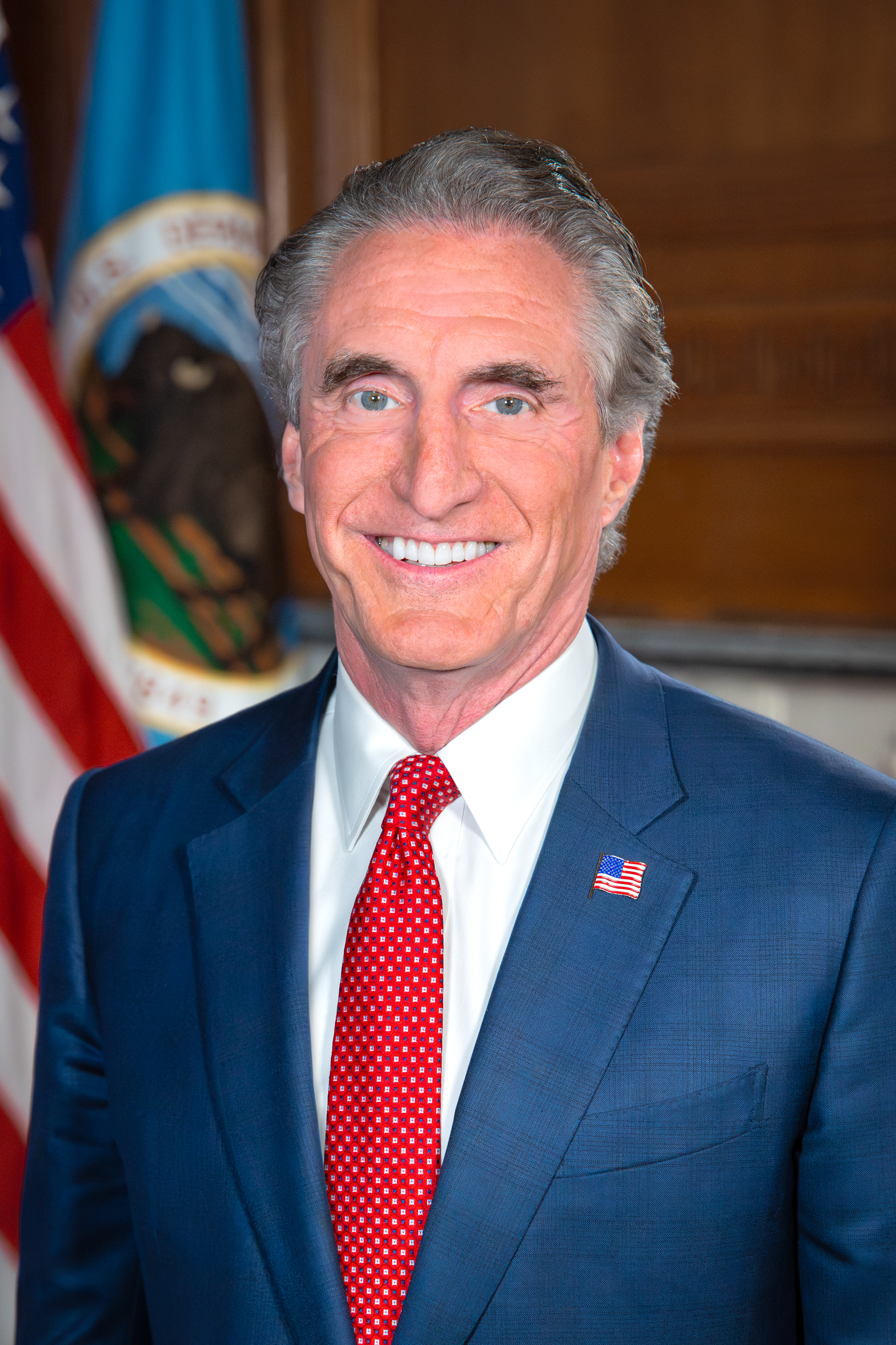
“For everybody in the audience, I just want to open up with the same words I did last year here, which is ‘thank you,’” said Burgum. This group in this room, your presence matters, your work matters, the investments you make, the teams that you build, the energy that you produce has transformed the world. And certainly, right now, with President Trump and an energy dominance strategy, which is all about energy abundance, it's about the energy for affordability at home to power our economy and win the AI arms race. But it's also about the ability to sell to our friends and allies, so that they don't have to buy from adversaries that are funding wars or funding terrorism against us. None of that's possible in America without the private sector.
Framing the agenda in the current turmoil. Delving into the topic dominating news headlines, Yergin asked the Secretary how the Middle Eastern crisis fits into the Energy Dominance agenda. “The energy dominance strategy is President Trump's approach towards unleashing power, as opposed to trying to restrict it. The idea that we need energy addition, as opposed to energy transition. The policy of energy transition was always false, because if you had a transition for reliable, secure and affordable 24-hour dispatchable power to something that is intermittent, weather-dependent, and highly taxpayer-subsidized, it's not energy transition, it is energy subtraction.
“… we have the entire Middle East and Israel all aligned in one position right now. We've got Eastern Europe more aligned with us than they've ever been, because they understand the threat of Russia. So, we had a summit a month ago to take on the threat of China controlling critical minerals. Those 51 countries showed up in part [because of] the U.S. So, the alliances and the opportunities have never been stronger.”
Yergin pressed Burgum for additional comments, and Burgum obliged, to some extent. “Hearing the same reports that were reported to the public, that there is dialogue going on, I think that people are encouraged about that. But obviously, there was a set of objectives that the administration went in on. One was that the dictator regime [in Iran] can never have a nuclear weapon. Tremendous progress was made last June in the last few weeks on that front. It was also [and objective] to take away their ballistic capability, and ability to project those weapons, including nuclear weapons, [at] our friends and allies that are around the world.
“Of course,” continued the Secretary, we learned that they'd always been lying about the distance they could go. And that was a real shock. I mean, they'd said that during negotiations last year, [and] they said it right before the negotiations broke down. ‘Don't worry, we could only go 1,200 miles.’ So, then they launched a missile toward Diego Garcia, 2,400 miles. That means they could hit London. If there was an Iranian ballistic missile placed in Venezuela, it could not just reach Houston, it could reach Washington, D.C. And so, again, the actions that the United States is taking against [Iran] are a lowering of the risk premium that I think was missing from the market.
Venezuela. Yergin shifted gears and asked the Secretary about his recent trip to Venezuela, the facilities that he saw, and the conversations that he had. “It was an amazing trip,” said Burgum. “Secretary Wright had an opportunity to go down there first. Both of us went down with oil executives. In addition, on my trip, there was also a group of mining and minerals executives. Over the two days that we were there, I had that chance to spend almost 10 hours with [Acting President] Delcy Rodriguez. They are full-on going to try to make sure that their country, in their words, is competitive. They want to be competitive to attract investment. So, the level of cooperation is great. And then we struggle with our own legislature here sometimes. They passed the hydrocarbon law in three weeks. They can remember what it was like 20 years ago. They want to go back [to that]. Their economy today is one-fourth the GDP that it was [back then].
Permitting. Going back to a domestic U.S. topic, Yergin reminded Burgum that as Secretary of The Interior and head of the National Energy and Dominance Council, permitting is very much a priority for him. Yergin asked him how he would gauge the progress on this critical issue.
“It's critical on a macro basis” answered Burgum. “The estimate is that there's $1.5 trillion of projects that have been approved by corporate boards or by state governments or by small businesses and individual private farmers and ranchers [for which] they can't get a permit. I mean, we're clogging up our economy. We could add points to our growth, if we could streamline permitting. And the permitting [matters], when we're in a global competition to build great things quickly. We're not saving the planet by killing U.S. Industries and shutting them up around the world and creating highly insecure supply chains. We have to bring all of that, bring all that home, permitting is key to that.
Potential Asian ties to Alaska. Going back to the international market, Yergin asked Burgum about the recent Indo-Pacific Energy Security Conference in Japan that he recently attended. The inference being that this could have a bearing on Alaskan energy. “There was strong interest,” said the Secretary. “With the events happening [around the globe], we had 650 people show up. It was sold out, with 17 energy ministers from as far south as Australia and New Zealand, and of course, our traditional post-World War II allies. {Regarding] Japan, I think the whole country now knows that 92% of their oil comes through the Strait of Hormuz. It's a country of 120 million people [squeezed] into the size of North and South Dakota.
“Korea, where we have 30,000 troops, is almost the same, almost completely dependent on imported foreign oil, and there are 55 million people living in half the size of North Dakota,” explained Burgum. “So, our allies are completely vulnerable. This is one of the reasons why President Trump declared an energy emergency on day 1, [issuing] an executive order unleashing Alaska's extraordinary energy potential. We have the ability to sell U.S. energy from Alaska. It'll keep the price down for the Europeans. It keeps the price down for Americans. But we can unleash all of that new supply to our allies in the Pacific. It may be more secure. And while we're at it, maybe we can get some to California, because California imports 63% of their oil, based on their own state website.
California and Alaska. This prompted Yergin to remark that California is the U.S. state that's most integrated in the global energy market. “Yes,” agreed Burgum, “and therefore the most vulnerable, because they're importing refined product, and we're taking product out of Canada, shipping it to Korea, and turning it into refined product and back to California.
“But this state has more internal combustion machines than any other state. They're creating an energy crisis of their own. They used to have 40 refineries,” continued the Secretary. “Texas has 36. There's the new one, the America First refinery being built—a $300 billion project, here in Texas. California's got eight refineries, but honestly, they're shutting down because of regulations.
“So, Alaska LNG is the key to this thing,” he continued. With every barrel of oil that's gone around in Alaska in the last 50 years, there's been no place to take that associated gas that's just been re-injected. It's not just a field, it's trillions of cubic feet. And then there's more gas that's up there. We held an Alaska lease sale for the first time in years from the Department of the Interior at the National Petroleum Reserve-Alaska last week. Record number of tracts, 1.3 million acres, with 87 tracts that we successfully completed bids on. About a dozen companies, including some of the best ones that we have that are up here, and other new faces, but very exciting.”
Top image: U.S. Interior Secretary Doug Burgum gets a quick lesson on A.I. from a Neudesic representative.