Billings Innovator gains international recognition for oilfield tool
BILLINGS, Montana -- An invention that has taken a Billings, Mont., company more than 12 years to develop has been listed by the National Association of Corrosion Engineers (NACE) as a finalist for the Corrosion Innovation Award. The top ten innovations of the year will be announced on March 24, during NACE’s annual conference in Nashville, Tenn.
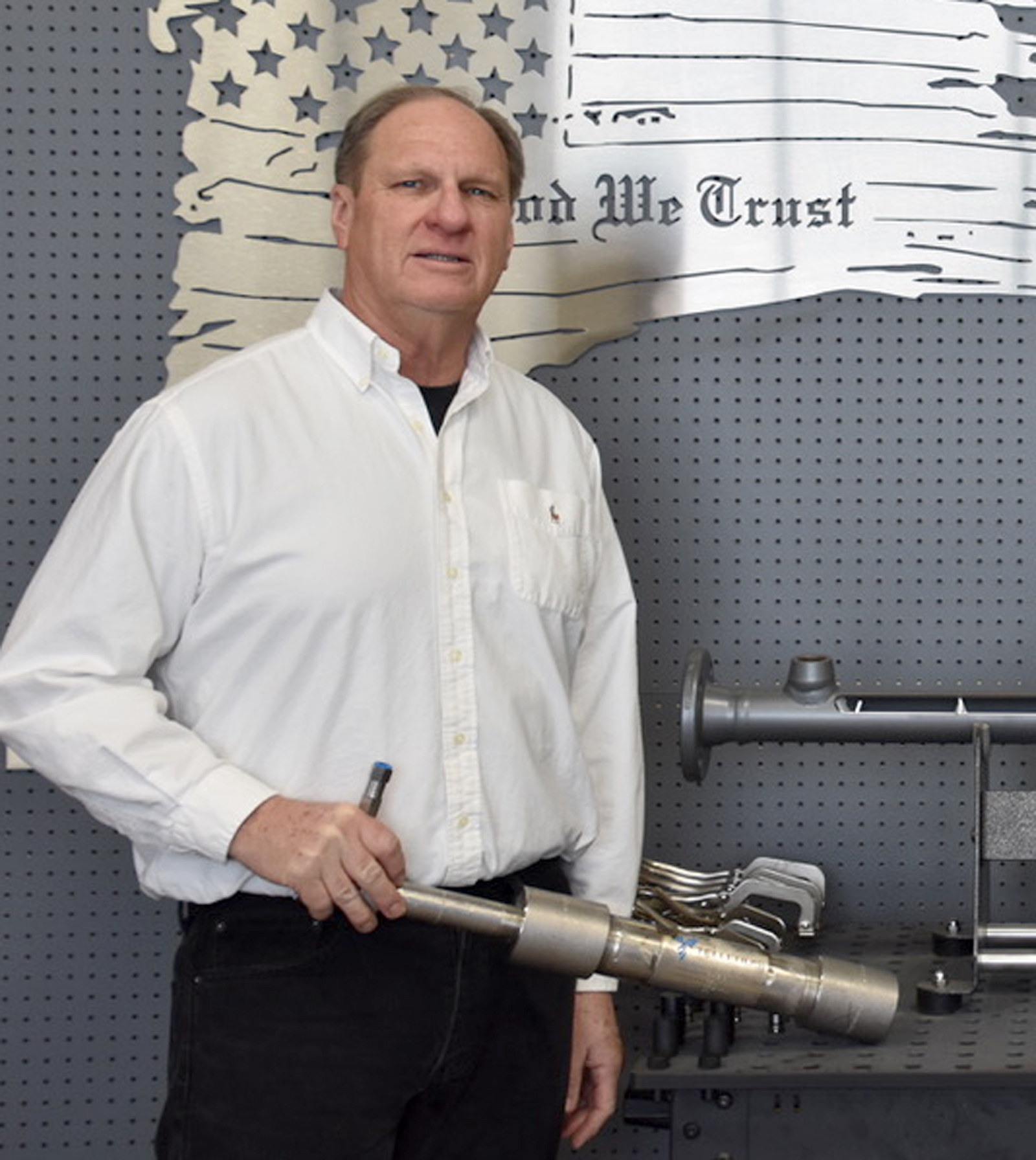
Tellerus Corporation has been named a finalist in the international competition, for its continuous-feed, in-line chemical mixing tool, which stands to save considerable money for oil producers. The tool was developed and patented by Tellerus Corporation President and CEO Paul Tarmann.
Tarmann said that he is honored by the NACE recognition, and believes this will help introduce the mixer’s potential to the broader industry. He claims that the mixer reduces chemical usage by 40% to 80% for oil well operators. Furthermore, he said that testing over the past 12 years has proven that it will extend the life of downhole pumps by two-and-a-half to three times, requiring less frequent change-outs. With pumps costing from $50,000 to $125,000, each, the savings could be significant, especially when factoring in the cost of installation and down-time. Operators also have experienced greater output.
The mixer improves the efficiency of chemical treatments while setting a new “best practice” standard in oil and gas production operations, claimed Tarmann. He said that it has potential to improve the efficiency of all continuous-feed chemical treatments. The tool’s concept, called Static Mixing, is not new to the industry, in general; this is, however, the first time it has been employed in upstream oil and gas.
The tool is a very simple concept that is a product of Tarmann’s experience in the oil patch. He is quick to say, however, that it’s “not all just me,” with a lot of people over many years involved in its development. Tarmann said he started talking to a team of advisers and other participants in 1982 about the idea, and others helped as it began to take physical form in 2005.
The Tellerus mixer began performance testing more than 12 years ago, with the cooperation of independent oil producers close to home, northeast of Melstone, which is near Billings. “Two operators have been our field ‘partners,’ who have allowed no-cost installations and monitoring, starting in 2007-2008,” said Tarmann. He explained that these fields were selected, because they are home to stripper production and far from the mainstream of high-profile activity. This has enabled Tellerus to develop its technology “under the radar” of larger operators and service companies.
“Early concept acceptance was allowed by a very few free-thinking engineers, company officials and field personnel,” said Tarmann. Installations in the Big Horn basin began in 2014, and field trials started in the Williston basin during 2016. The first Bakken field trial started in July 2018. Tarmann went through four or five refinements of the tool, but now the mixers are available in two configurations: threaded and welded-flange.
Tellerus has contracted with a metal fabricator in Lockwood, Mont., to produce the mixers. The fabricating company was selected primarily because of its high-quality control measures, which are a requirement by insurers for risk management. As sales increae, Tellerus may engage other fabricators to help produce mixers, although the current contractor has the ability to expand. Billings is a good location for Tellerus because of its proximity to the Bakken, and it is close to Wyoming’s Powder River basin, which is coming into new prominence.