New tracer technology brings cost savings to unconventional well stimulation
PERTH, Australia -- Technology company Tracerco, part of the FTSE 100 Johnson Matthey Plc, has been helping customers to achieve savings of as much as 20% in reservoir stimulation costs through their smart tracer technology.
Over several projects in the last few years Tracerco has demonstrated the value of using smart tracers to measure stimulation effectiveness in unconventional oil and gas reservoirs. In the challenging market conditions that the industry faces today, reducing lift costs is paramount. Stimulation optimization is a key area to reduce spending on stimulation activities, and yield maximum production.
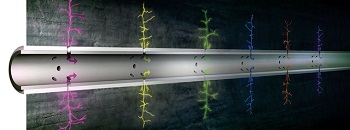
Unique tracers are used to tag the native oil, gas and frac water in each of the stages in unconventional wells. Samples are taken at regular intervals and analysed at one of our specialist tracer laboratories located around the world, including our recently opened laboratory based in Perth. Or, if rapid sample analysis is required, or there are problems shipping samples, Tracerco can deploy a mobile lab to analyse results on site.
The analysis allows accurate stage flow data comparison to be made and determine the most effective stimulation conditions. This can identify where stimulation is not effective and therefore in future wells with similar geophysical expectations, stimulation can be deleted in those stages, ensuring resources are optimized.
In addition, tracers can be used to compare stimulation technologies in order to identify the most effective overall. One customer used smart tracers in this way, tagging two wells with the same geophysical expectations, but with two competing stimulation strategies.
Not only did they identify two stages where stimulation was ineffective (8 and 9 within each well), they discovered that one stimulation strategy yielded 18,000 bbl/month, whilst the other yielded nearly 45% more product at 26,000 bbl/month, with no anomaly showing majority flow from one stage due to unforeseen geological properties. If the operator deleted stages 8 and 9 from the stimulation in either strategy it would have yielded a 20% saving in stimulation costs with only a 4% reduction in production. This, coupled with the knowledge that one stimulation technology was far superior in terms of yielding product, meant the operator could cost effectively optimise their stimulation strategy.