From impossible to inevitable: Superhot rock geothermal to unlock gigawatts of energy
EXECUTIVE VIEWPOINT
STEVE KRASE, CEO,HEPHAE ENERGY TECHNOLOGY
Beneath our feet lies an energy resource powerful enough to meet the world’s electricity demand many times over. Yet this vast, renewable energy source remains largely untapped, as the ability to drill deeper and hotter rocks requires drilling technologies that can operate at temperatures far beyond today’s limits.
Traditional geothermal locations. The majority of operating geothermal plants are built in regions where natural heat is close to the surface and associated with pockets of steam or hot water. These conditions are largely isolated to geographic regions with high tectonic or volcanic activity, such as Iceland’s volcanic fields or Northern California’s iconic Geysers complex. These projects prove the value of geothermal, but they barely scratch the surface of its true potential.
Aiming for greater scale. It’s time to think in gigawatts, not megawatts. Super-hot rock geothermal marks a step change in scale, delivering baseload power capable of unlocking gigawatts of energy. We know for certain that the deeper we drill, the hotter it gets. According to Clean Air Task Force (CATF), “Just 1% of the world’s super-hot rock geothermal potential could generate 63 terawatts of clean firm power, eight times more energy than the rest of the world’s electricity put together.” This is the missing link in the global energy portfolio, offering carbon-free power nearly anywhere. The deeper we drill, the greater the opportunity to deliver reliable, renewable energy at the scale needed to decarbonize global electricity systems.
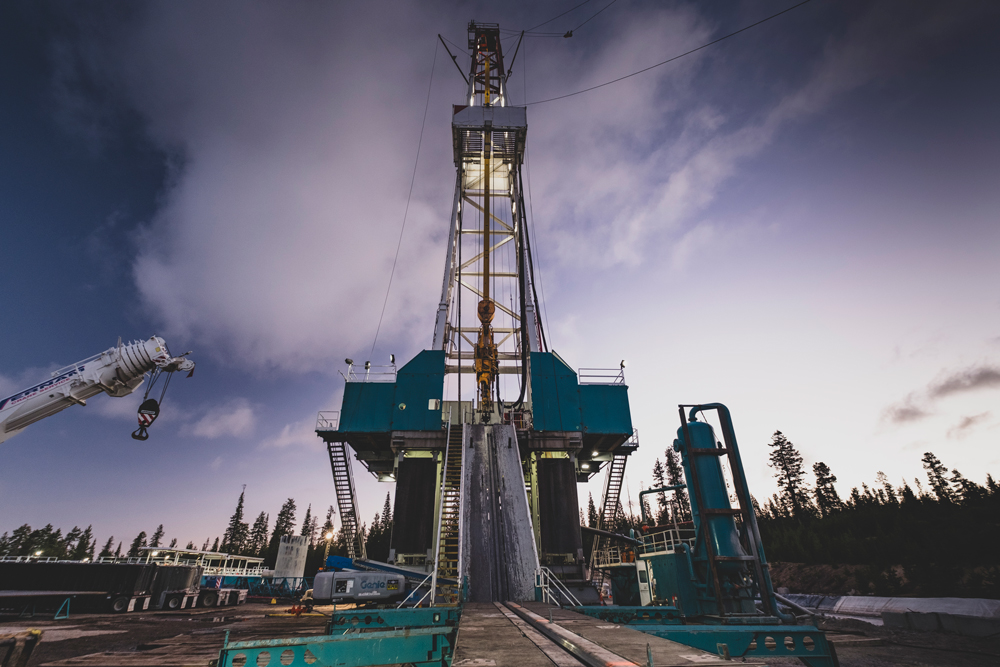
Pushing technology further. Decades of proven oil and gas drilling technology have paved the way for geothermal breakthroughs, but significant engineering hurdles remain, Fig. 1. To effectively unlock super-hot rock, we must bridge a fundamental technology gap. While other renewables have surged ahead, geothermal has too often been left behind, largely constrained by drilling tools unable to survive the extreme heat in these deeper, hotter formations.
This is not science fiction, it’s rocket science. The same technologies that power spacecrafts in extreme environments are now being adapted to revolutionize geothermal drilling. By merging aerospace with subsurface oil and gas expertise, companies like Hephae Energy Technology are redefining what’s possible beneath the earth’s surface.
Finally breaking the barrier. From impossible to inevitable, breakthroughs often come from diverse minds working across disciplines. For decades, drilling companies invested millions trying to break the 200°C barrier for circulating temperature, but progress plateaued. The leap came when a diverse team of engineers and scientists from various disciplines brought fresh ideas. For Hephae, that journey began in Basque Country, Spain, a hub of high technology infrastructure, where ultra-high-temperature robotics were developed to withstand geothermal extremes.
“When it comes to the economics of why hotter is better, every degree matters,” states Hephae CTO John Clegg. Higher-temperature resources yield dramatically more energy per well, slashing the levelized cost of electricity (LCOE) to make geothermal competitive with fossil fuels. Next-generation geothermal technologies, like enhanced geothermal systems (EGS) and advanced geothermal systems (AGS), aim to extend access to heat anywhere by creating engineered reservoirs underground. As Jenna Hill of CATF explains, “When next-generation geothermal systems are pushed to superhot rock conditions, they could significantly boost power potential and reduce costs, with each well producing five to ten times more power than today’s conventional geothermal projects.” That shift would turn geothermal into a true global energy powerhouse.
The economics extend beyond power generation. Every day on a drilling rig carries a price tag of hundreds of thousands of dollars, making reliability paramount. As I stated recently, “traditional Measurement While Drilling (MWD) systems are not rated to the extreme temperature and stress conditions associated with superhot rock geothermal, forcing costly delays and equipment replacements that can add millions to project budgets.”
Physics-driven improvements. High-performance MWD systems, like those under development at Hephae, reduce downtime, improve well placement, and cut days off drilling schedules, driving measurable savings and accelerating project timelines. This is driven by physics. According to the Arrhenius equation, every 10°C increase in reservoir temperature reduces the life of electronics by 50%. Therefore, increasing the rating of MWD by 30°C makes it eight times more reliable at equivalent temperatures.
Tony Pink of Pink Granite Consulting notes that “Mazama Energy has developed the world’s hottest enhanced geothermal system, reaching 331°C, using cooling techniques and insulated piping. As Mazama advances, high-temperature MWD systems will be critical to drilling deeper, hotter wells while reducing costs and operational risks.”
The global race to scale super-hot rock geothermal is underway. CATF reports that more than two dozen wellbores have been drilled worldwide, many within existing geothermal fields. These early efforts demonstrate that the pathway towards reaching super-hot rock temperatures above 400°C is well underway and represent a critical threshold to unlocking terawatt-scale energy output.
Governments and research institutions are taking notice. The technology to enable super-hot rock energy is within reach, but it will require cross-sector collaboration, testing facilities that replicate field conditions, and continued investment to support advancements in drilling technology. From the United States and Japan to Iceland and the European Union, programs are being launched to accelerate drilling demonstrations, fund high-temperature materials research, and establish regulatory pathways for deployment.
The U.S. Department of Energy’s Enhanced Geothermal Earthshot targets geothermal power for 65 million homes by 2035 to fill the gaps in supply and support grid stability. Achieving that vision will require driving down the cost of geothermal by tapping deeper, hotter formations to produce more energy at a lower cost.
If we can reach the temperatures that lie just a few miles beneath our feet, we can power the world reliably, sustainably, and at scale. The heat beneath our feet is there. The expertise exists. Now we must bridge the gaps to bring gigawatts of geothermal power to the surface.
________________________
STEVE KRASE is CEO of Hephae Energy Technology, having fulfilled that position since January 2021. He has 45 years of industry experience, including stints at Nabors Industries, Halliburton and Baker Hughes. Hephae Energy Technology enables next-generation geothermal, with ultra-high temperature robotics to support the full life cycle of a well, from drilling and completions to operations and maintenance.
Related Articles- Halliburton’s ZEUS IQ™ powers the first fully autonomous fracturing platform with closed-loop automation (January)
- Making shale competitive (December 2025)
- Energy services: The relentless backbone of global energy security (December 2025)
- How space tech can help autonomous oil rigs become a reality (December 2025)
- Coiled tubing drilling: A strategic enabler for mature field redevelopment (December 2025)
- “The times they are a-changin” (December 2025)
- Subsea technology- Corrosion monitoring: From failure to success (February 2024)
- Applying ultra-deep LWD resistivity technology successfully in a SAGD operation (May 2019)
- Adoption of wireless intelligent completions advances (May 2019)
- Majors double down as takeaway crunch eases (April 2019)
- What’s new in well logging and formation evaluation (April 2019)
- Qualification of a 20,000-psi subsea BOP: A collaborative approach (February 2019)